
A Maths worksheet that once took 30 minutes now occupies the whole evening. Your child closes the book, says they are “just bad at it” and refuses to show you the latest test. One incident proves little. A pattern deserves attention.
The clearest signs your child needs a GCSE tutor are repeated learning gaps, falling results despite genuine effort, subject avoidance and difficulty turning knowledge into exam marks. Tutoring is not the automatic answer, but targeted help can work. The Education Endowment Foundation reports that one-to-one tuition can provide about five months of additional progress on average, with important variation between programmes.
This guide helps you distinguish an ordinary difficult week from a problem that needs action. It also explains when school, pastoral or health support should come first.
How can you tell if your child needs a GCSE tutor?
Look for a persistent change from your child’s normal performance, confidence or study habits. One low mark is not enough. A tutor becomes worth considering when a specific, teachable problem continues across several weeks despite school support, independent practice and genuine effort.
Start with evidence, not comparison. Your neighbour’s child, an older sibling and a predicted grade from last year are poor baselines. Compare your child with their own previous work.
Useful evidence includes marked assessments, question-level mock results, teacher comments, homework time and the student’s explanation of what feels difficult. A vague worry becomes actionable when you can name the subject, topic and pattern.
The site’s guide on when to start GCSE tutoring explains how timing changes from Year 9 to Year 11. Earlier is helpful only when the support has a clear purpose.
What are the 10 signs your child may need a GCSE tutor?
Ten useful signs include repeated falls in results, recurring misconceptions, unusually long homework, effort without progress, weak exam technique, subject avoidance, falling confidence, teacher concerns, disorganised revision and family conflict. Several connected signs matter more than one isolated event.
1. Results keep falling across several assessments
One poor test may reflect illness, nerves or an awkward topic. Two or three assessments showing the same decline are more meaningful.
Compare the papers rather than the headline grades. Repeated losses in algebra, extended writing or required practical questions point towards a teachable gap. A tutor can target that gap instead of restarting the whole course.
2. The same misunderstanding keeps returning
Recurring errors often reveal a missing foundation. A student may repeatedly expand brackets incorrectly, confuse language analysis with feature spotting or misapply an equation.
Correction alone has not worked when the mistake returns a week later. The student needs the idea rebuilt, practised and retrieved again after a delay.
3. Homework takes far longer than expected
Time matters when the pattern is consistent. A 30-minute task taking two hours can signal weak prior knowledge, poor organisation, distraction or anxiety.
Ask the teacher how long the work should take. Then watch where progress stops. Staring at question one suggests a different problem from completing the work but checking every answer repeatedly.
4. Hard work is not improving the outcome
Long revision sessions do not guarantee effective revision. Students can spend hours highlighting notes yet struggle to recall anything without the page open.
The complete GCSE revision guide explains active recall, spaced practice and error correction. A tutor may help when the student needs someone to model those methods and apply them to current school topics.
5. Knowledge does not turn into exam marks
Your child may explain a topic well at dinner, then produce a weak timed answer. That gap often involves command words, structure, selecting evidence, showing working or managing time.
Board-specific practice matters here. The tutor should use the correct specification, tier and paper, not a random worksheet carrying the same subject name.
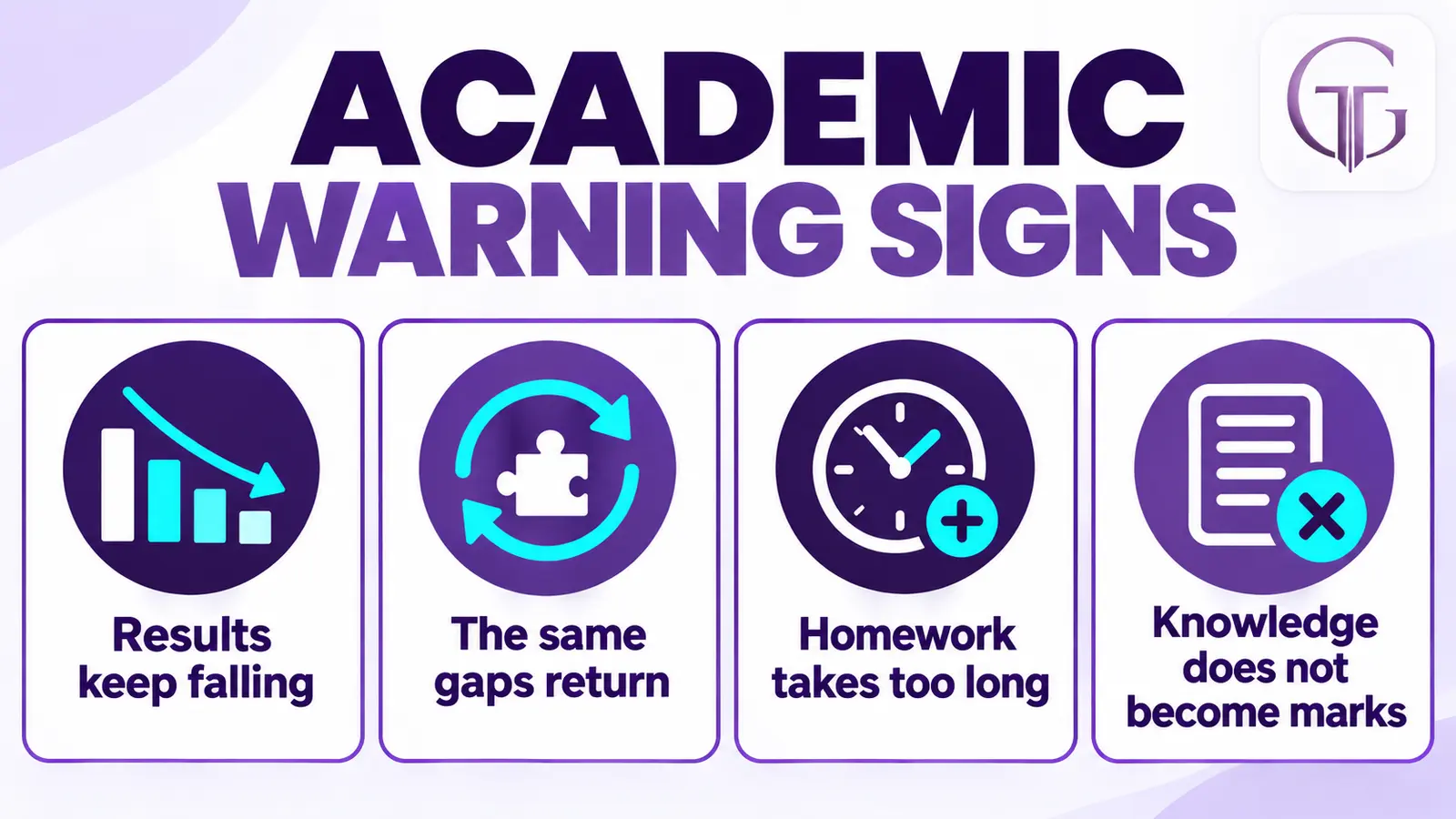
6. Your child avoids one subject
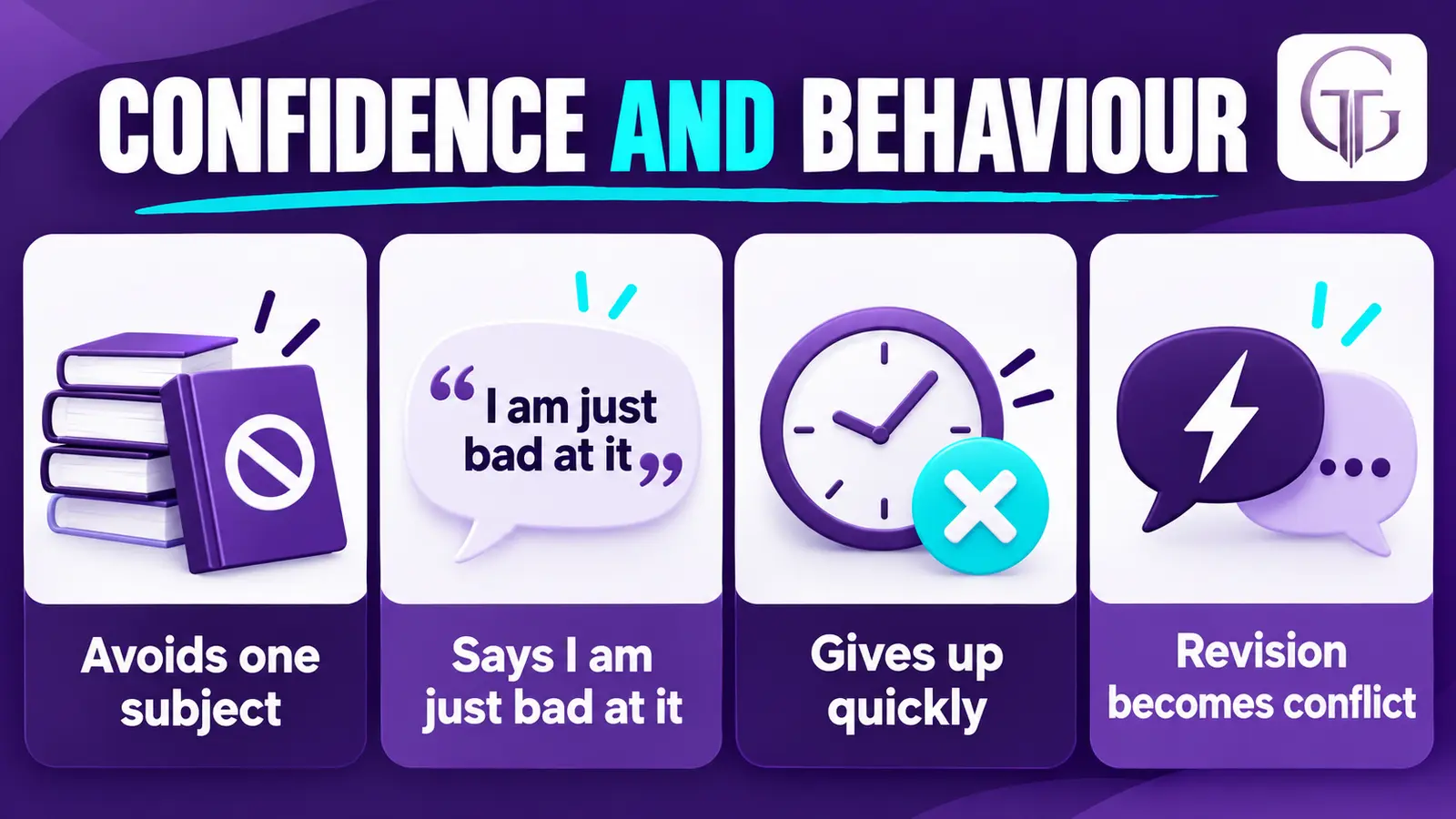
Avoidance can look like forgotten books, missing homework or revising every subject except Maths. Calling it laziness usually makes the conversation worse.
Ask what happens at the point they stop. Confusion, fear of being wrong and a task that feels too large require different responses. A good tutor makes the first step smaller and visible.
7. Confidence has become a fixed negative belief
Phrases such as “I cannot do Science” turn a current gap into an identity. Students then avoid practice, which protects them from feeling wrong today but widens the gap tomorrow.
Tutoring should rebuild competence through achievable work. Empty praise is not enough. The student needs proof that a method they could not use last month now works independently.
8. A teacher raises a specific concern
Teacher feedback carries weight because it reflects classroom work over time. Ask for precision. “Needs to improve” is not a plan, while “cannot compare writers’ viewpoints under timed conditions” gives everyone a starting point.
Share that information with any tutor. Effective tuition should connect to normal teaching rather than create a separate course.
9. Revision is busy but badly organised
A desk covered in resources can hide a lack of direction. Warning signs include abandoned timetables, constant resource switching and repeated revision of comfortable topics.
A GCSE revision timetable should state the exact task, method and time needed. Tutoring may help when your child cannot diagnose priorities or turn mock feedback into weekly actions.
10. Homework and revision repeatedly damage family life
Parents should not have to become the nightly subject teacher. Regular arguments can make the student associate learning with criticism and make the parent responsible for every unfinished task.
A neutral tutor can reduce that friction, but only if workload is the real issue. An exhausted teenager with five commitments may need fewer demands, not another lesson.
What might these GCSE tutoring signs actually mean?
The same behaviour can have different causes. Falling marks may reflect a topic gap, poor exam technique, absence, anxiety or an unsuitable revision method. Match the response to the likely cause, then use school evidence and your child’s account to test that judgement.
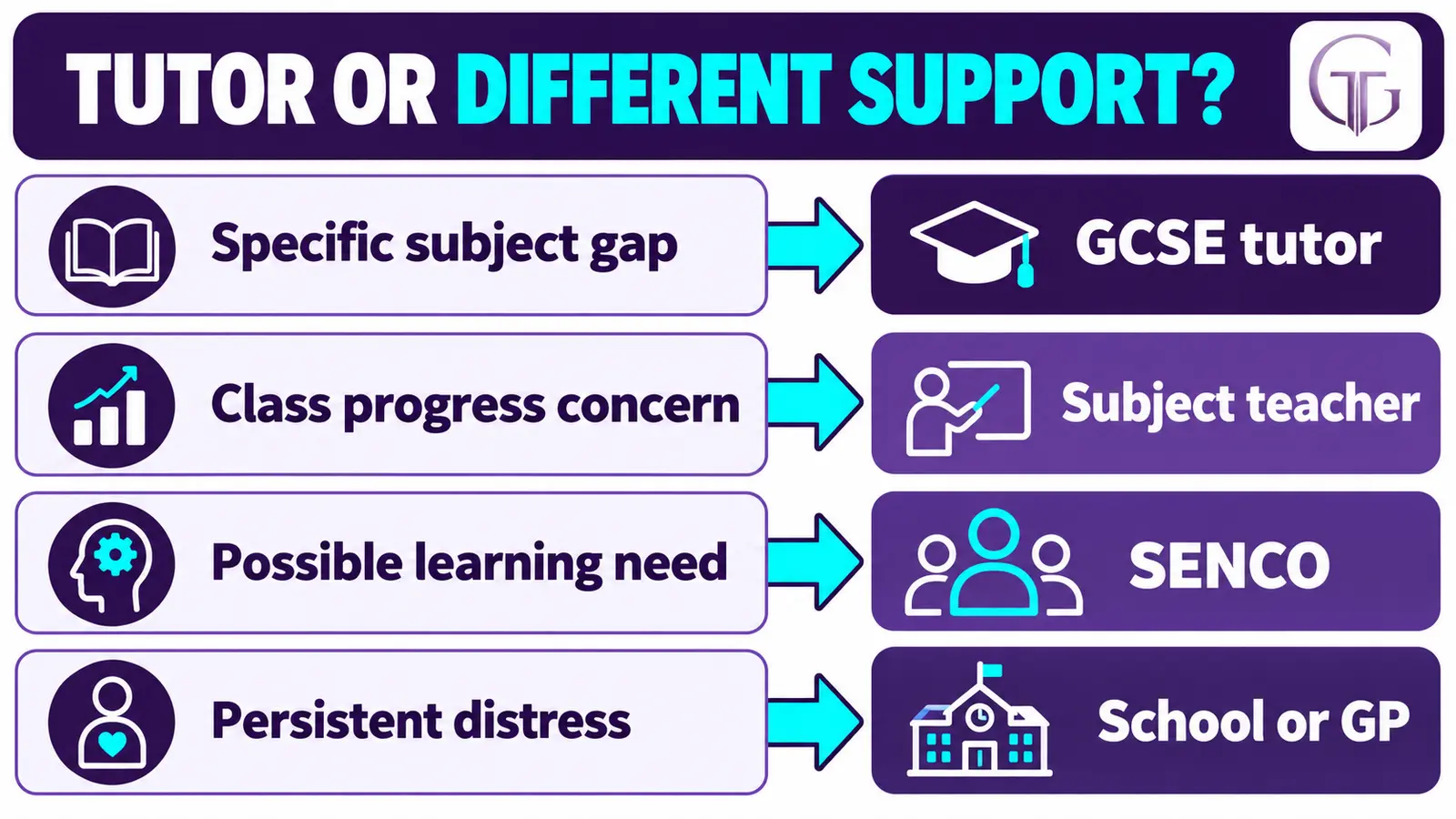
| What you notice | Possible explanation | Sensible first action |
|---|---|---|
| Errors cluster around one topic | Specific knowledge or method gap | Ask the teacher for topic detail, then consider targeted tuition |
| Answers are unfinished in mocks | Timing, stamina or planning problem | Practise timed sections and review the paper structure |
| Difficulty appears across subjects | Organisation, attendance, wellbeing or broader learning need | Speak to school before booking several tutors |
| Panic, sleep problems or physical symptoms persist | Wellbeing needs attention | Contact school support or a GP |
| Work is accurate but too easy | Student may need stretch | Ask the teacher about extension before assuming tuition is needed |
Patterns across every subject rarely need three separate tutors as the first move. That is expensive and often misses the cause.
When is a GCSE tutor not the right first step?
A tutor is not the first answer when severe or persistent distress, school refusal, bullying, attendance problems, possible SEND needs or exhaustion drives the difficulty. Speak to the school, SENCO, pastoral team or GP as appropriate, then add academic support only if it still helps.
The NHS advises parents to seek help when anxiety or low mood is severe, persists and interferes with everyday life. Its guidance on helping a child with exam stress lists sleep problems, irritability, physical symptoms and loss of interest among signs to notice.
A tutor can make a difficult topic less frightening. They cannot diagnose a learning need, resolve bullying or replace mental-health care. Our GCSE exam anxiety guide explains the boundary in practical terms.
What should parents do after noticing these signs?
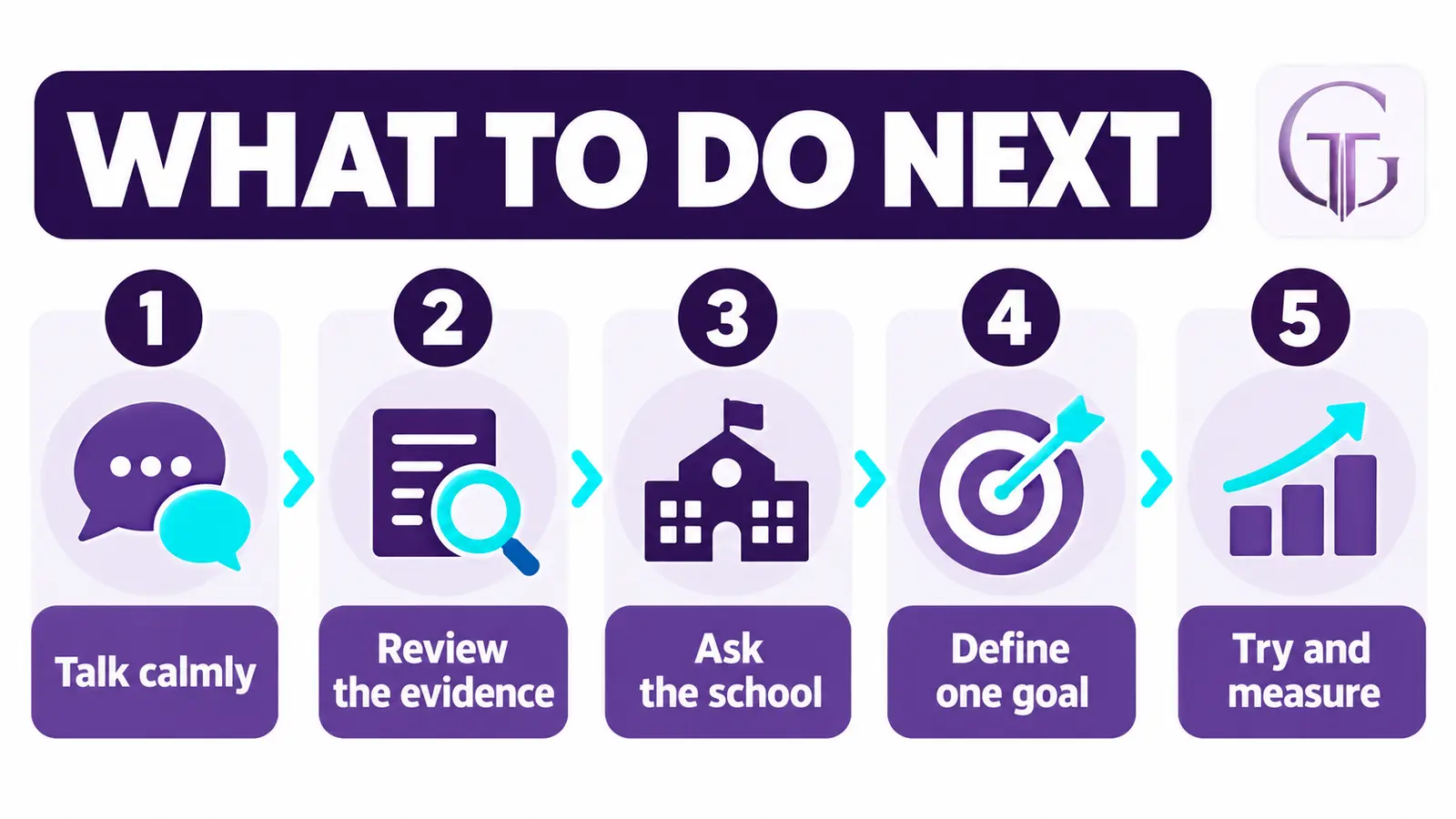
Talk to your child without blame, gather recent evidence, ask the school for specifics, define one priority and trial the least intensive suitable support. Record a baseline before tutoring begins, then review whether understanding, independence and confidence improve rather than watching grades alone.
- Talk calmly. Ask which part feels hardest and what help would feel useful.
- Review the evidence. Collect two or three marked pieces, reports and mock feedback.
- Ask the school. Confirm the topic, exam board, tier and available school support.
- Define one goal. “Improve Maths” is vague. “Solve simultaneous equations independently” is measurable.
- Choose the response. Use school intervention, a revised home routine, tutoring or specialist support according to the cause.
- Agree to a trial. Your child should understand why the support is being introduced.
- Review progress. Look for fewer repeated errors and more independent attempts.
Parents can see the practical lesson process on the how online GCSE tutoring works page.
How should parents choose a safe and suitable GCSE tutor?
Choose a tutor with relevant subject knowledge, current exam-board familiarity, clear safeguarding arrangements and a plan based on evidence. Ask how progress will be measured, who communicates with the child and what happens in the first lesson. Avoid guaranteed grades and pressure-based sales claims.
The NSPCC’s guide to finding a tutor for your child covers checks, references, boundaries and suitable learning spaces. Online lessons still need clear safeguarding procedures.
Ask these questions before committing:
- Which GCSE boards and tiers do you currently teach?
- How will you diagnose the first priority?
- Will lessons use recent schoolwork and mock papers?
- How are tutors checked, supervised and reviewed?
- How will parent updates work?
- What evidence will show that tutoring is helping?
Subject expertise should match the need. Explore dedicated support for GCSE Maths, GCSE English and GCSE Science rather than assuming one tutor can cover everything equally well.
How can parents tell whether GCSE tutoring is working?
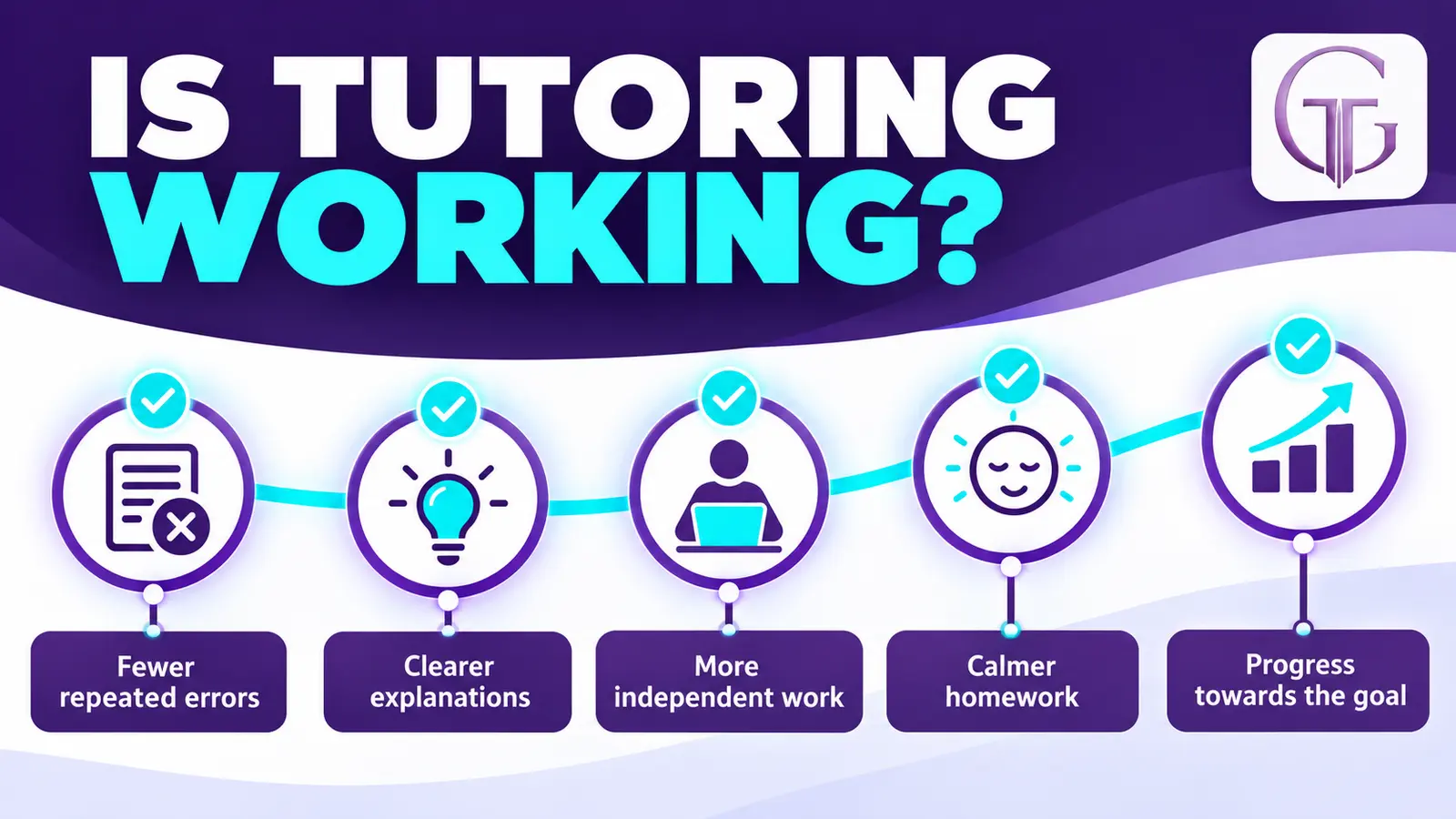
Effective tutoring should produce fewer repeated mistakes, clearer explanations, more independent work and calmer study habits. Compare progress with the starting evidence and agreed goal. Grades may take time to change, so review understanding and behaviour alongside assessment results.
Tutoring is becoming useful when your child can:
- Explain a method without copying the tutor
- Complete a similar question independently
- Identify why an old answer lost marks
- Start homework with less prompting
- Use the correct revision resource and paper
- Transfer the skill into classwork or an assessment
Ask for a review after a reasonable block of lessons rather than judging every session. If nothing changes, discuss the teaching approach, goal or tutor fit. More sessions are not automatically the answer.
What do parents commonly ask about GCSE tutoring?
Parents usually ask whether one poor mock justifies tutoring, when to begin, how often lessons should happen and whether tutoring helps confidence. The answer depends on the pattern, goal and student. Targeted support beats tutoring introduced simply because other families are doing it.
Does one bad GCSE mock mean my child needs a tutor?
No. Review the paper, previous assessments and teacher feedback first. One result may reveal a narrow topic gap that school support or focused independent practice can fix.
What is the best year to start GCSE tutoring?
Start when a persistent, specific need appears. Year 10 allows time to rebuild foundations, while Year 11 support often focuses more heavily on mocks, timing and exam technique.
How often should a GCSE student have tutoring?
Frequency should match the goal, available time and student’s capacity. A consistent weekly lesson may suit one subject, but additional sessions should not crowd out sleep, schoolwork or independent practice.
Can tutoring help a confident student aiming for grades 8 or 9?
Yes. Targeted tuition can provide stretch, feedback and advanced exam practice, but parents should first check whether school extension and independent resources already meet the need.
Should I involve my child in choosing a tutor?
Yes. Students engage better when they understand the goal and feel comfortable asking questions. A trial lesson can test communication, pace and subject fit.
Can a tutor help with exam anxiety?
A tutor can reduce preparation-related uncertainty through structured practice. Persistent anxiety that affects sleep, eating, attendance or everyday life needs school or health support as well.
How do I start GCSE tutoring online?
Gather the year group, subject, exam board, tier, weak topics and recent assessments. Then use the free GCSE class booking page to explain the specific support required.
Need GCSE Support?
Get one-to-one online GCSE tutoring for Maths, English, Science and other GCSE subjects from home.