
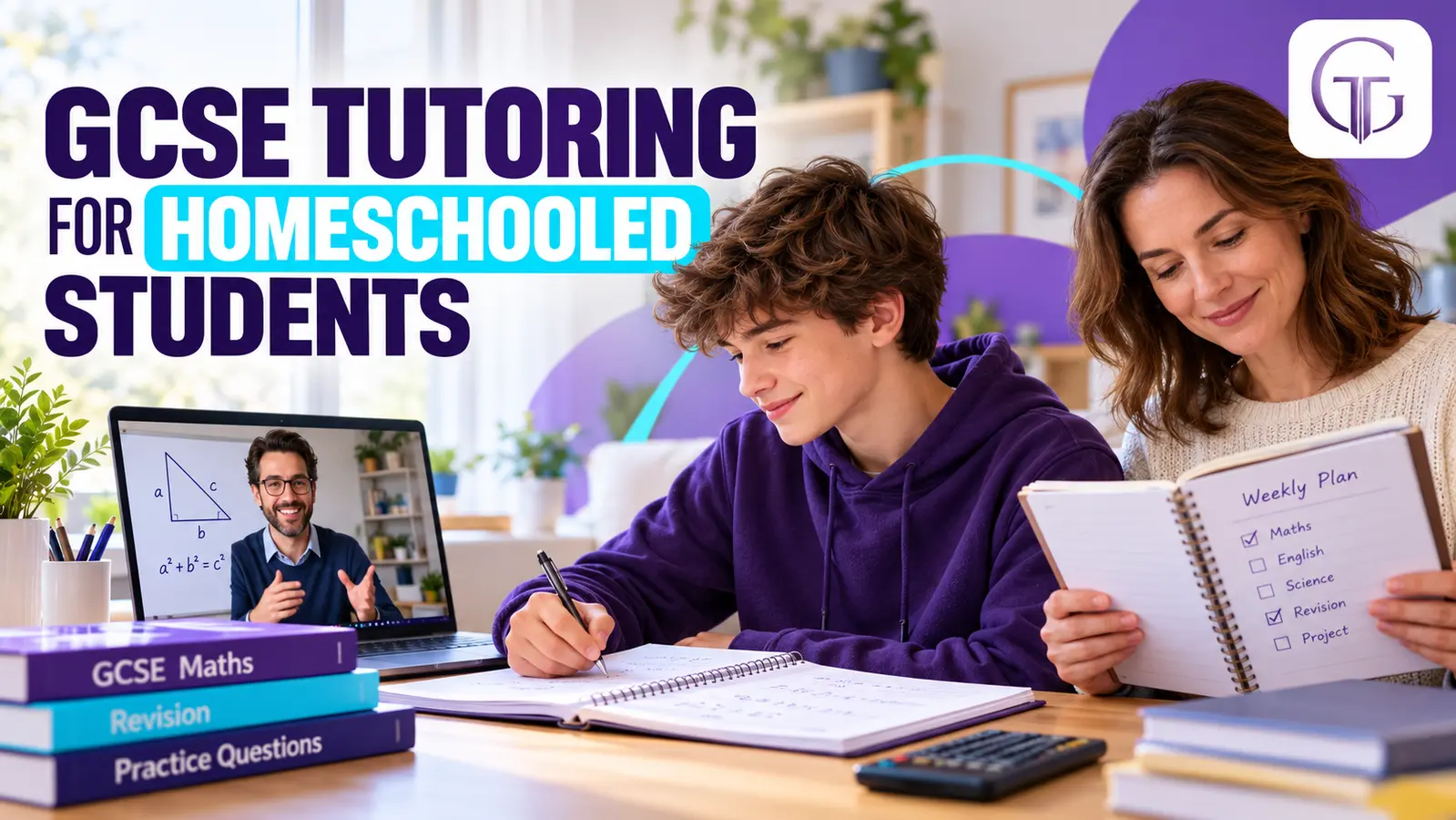
A laptop lesson is open on the kitchen table, a half-finished maths question sits in a notebook and nobody has rung a school bell. That ordinary scene captures why GCSE tutoring for homeschooled students can work so well: expert teaching arrives without taking over the family’s whole approach.
Demand is not marginal. Department for Education data recorded 126,000 children in elective home education in England in autumn 2025, up from 111,700 the previous autumn. The release also warns that better data quality may explain part of the rise. The Department for Education publishes the elective home education figures.
Good tuition brings subject expertise and honest marking. It cannot carry the family’s wider responsibility for home education, so those boundaries need to be clear.
What is GCSE tutoring for homeschooled students?
GCSE tutoring for homeschooled students is targeted subject teaching for learners educated outside mainstream school. A tutor explains content, sets suitable practice, marks work and develops exam technique, while the family keeps responsibility for the wider education plan, qualification choices and exam arrangements.
Home education describes the overall provision. Tutoring is one part of it. A tutor might teach algebra every Tuesday, mark an English response on Friday and report what needs attention next. That is valuable, but it is not the same as providing a complete school timetable.
An online school usually offers a broad timetable. A course provider supplies sequenced materials. A tutor teaches the learner directly.
How is home education different from an online school or a tutor?
Home education is the family’s overall approach to providing suitable education. An online school supplies a wider organised programme, while a tutor usually teaches specific subjects or skills. None of these labels alone confirms who chooses the specification, enters exams or monitors the complete curriculum.
Parents sometimes hire a maths tutor and assume exam entry is included. Usually, it is not. Equally, a self-study course may include assignments but no live weekly lesson. Read the service description closely and ask blunt questions.
UK rules are devolved, so families should follow guidance for the nation where they live. The official home education guidance links responsibilities and explains the position in England, including the different process for a child attending a special school. A blog should never replace that guidance.
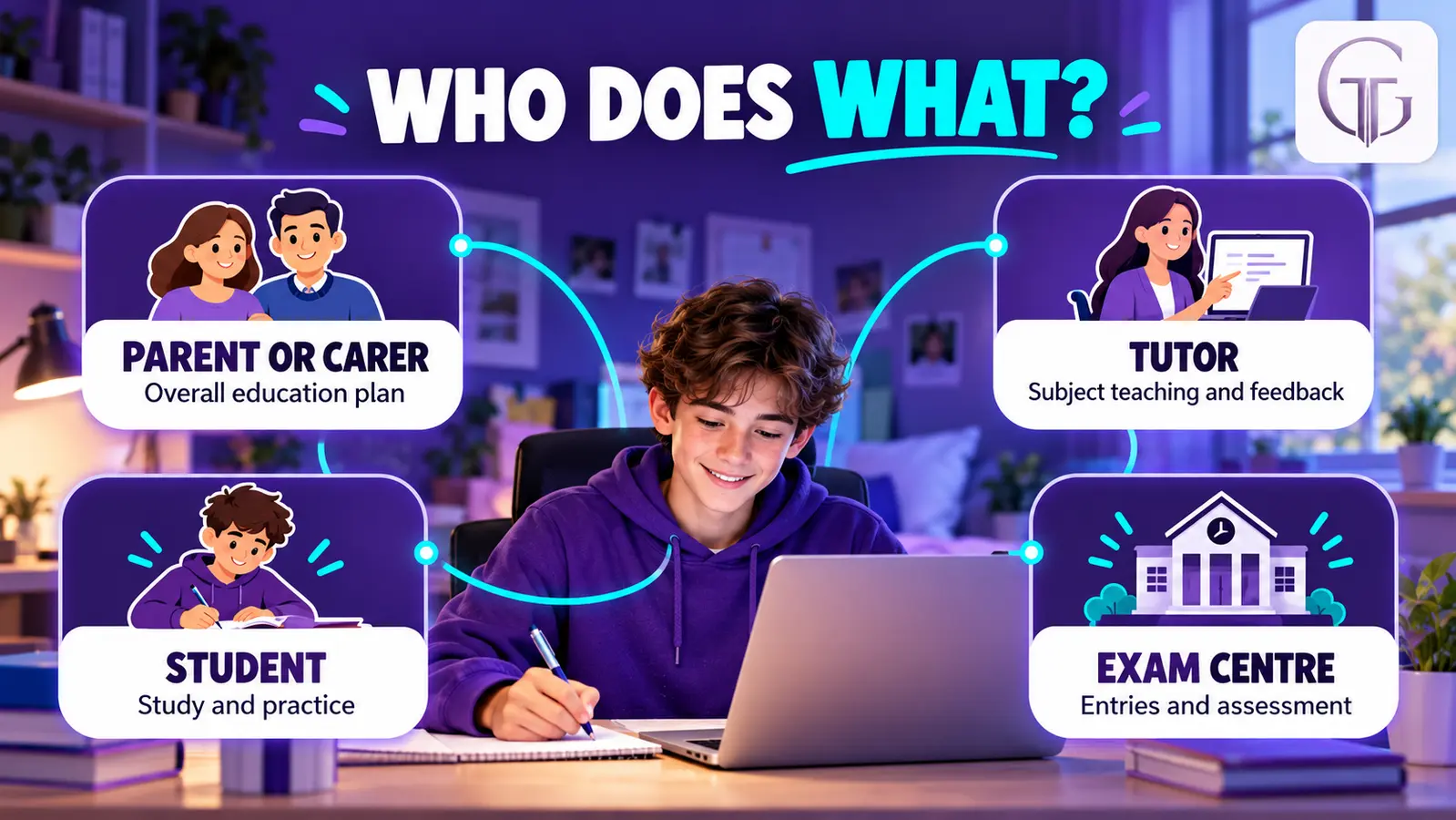
The cleanest working split looks like this:
- Parent or carer: oversees the education, goals, resources and administration.
- Tutor: teaches agreed subjects, diagnoses gaps and gives feedback.
- Student: attends, practises and learns to work independently.
- Exam centre: accepts the entry, applies exam rules and hosts assessment.
What should families decide before hiring a GCSE tutor?
Before hiring a tutor, decide the learner’s goals, subjects, qualification route, likely exam board and intended exam series. Then identify current attainment, learning needs and available weekly study time. A tutor can refine the plan, but should not be expected to invent it from nothing.
Start with progression. Does the learner want a particular college course, apprenticeship or A level? Check what that destination asks for before filling a timetable with subjects chosen out of habit.
Next, separate essential decisions from preferences. English and maths often matter for progression, while other qualifications depend on the learner’s route. Random flexibility becomes a mess by Year 11.
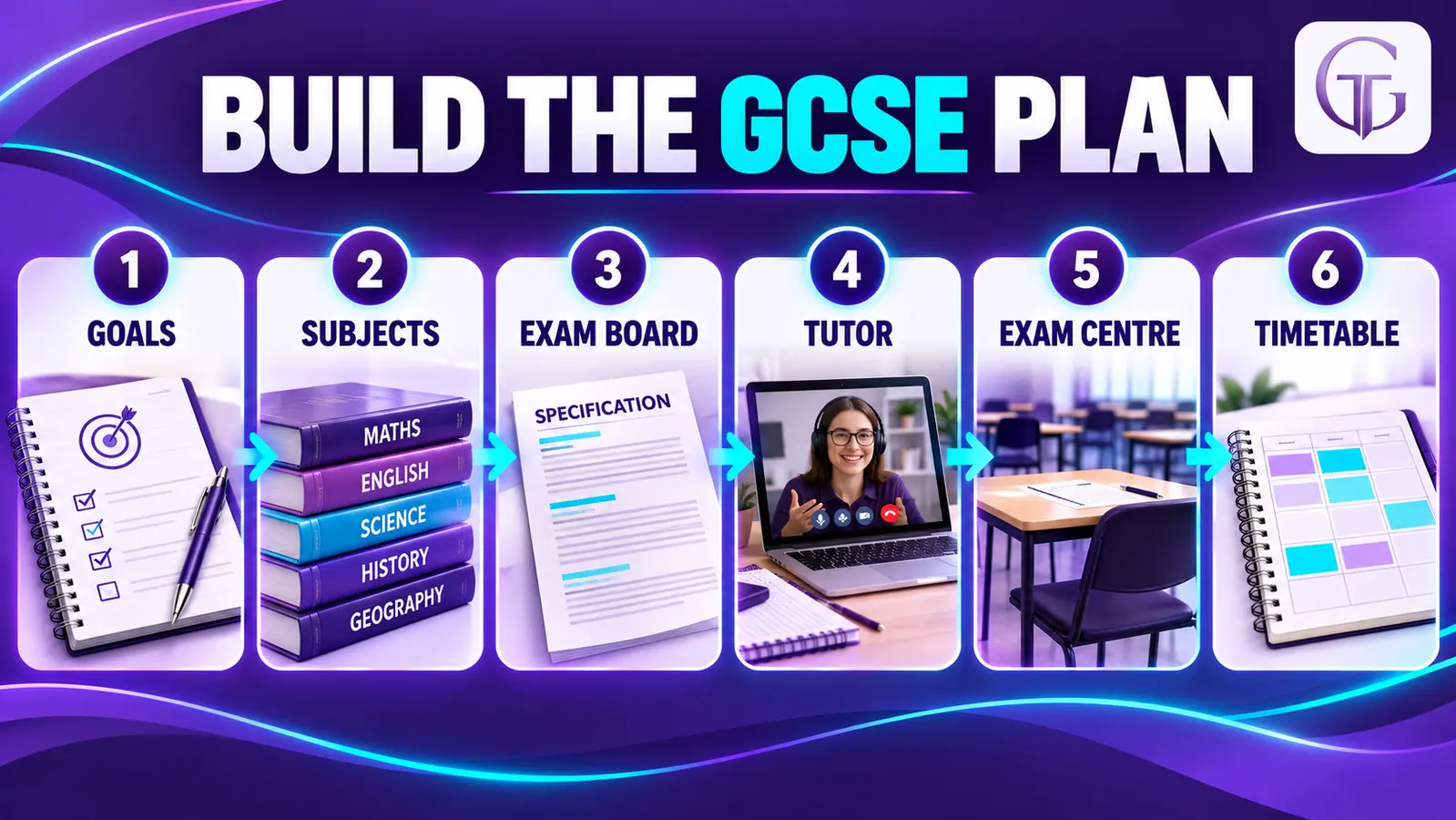
Use this order:
- Write the learner’s next-step goal.
- Choose a realistic subject set.
- Confirm GCSE or International GCSE for each subject.
- Record the awarding organisation and specification code.
- Find a centre willing to enter that exact qualification.
- Match the tutor to the confirmed specification.
- Build a weekly timetable with practice and rest.
How should tutoring fit into a home-education GCSE plan?
Tutoring should solve defined problems inside the wider plan. Use lessons for difficult concepts, feedback, exam technique and accountability, then leave routine reading and practice for independent study. One focused lesson plus purposeful follow-up usually beats several passive sessions with no work between them.
A sensible lesson has a visible job. Perhaps the student cannot rearrange equations, structure a comparison or explain a required practical. The tutor models the skill, watches the learner try it and sets a short task that tests the same idea later.
The guide to how online GCSE tutoring works explains the format. The online and in-person comparison helps test whether screen-based teaching suits the learner. A student who will not engage on camera will not be transformed by a digital whiteboard.
Which GCSE subjects benefit most from one-to-one tuition?
One-to-one tuition is especially useful in cumulative subjects such as maths and science, and in English where feedback drives improvement. Languages, humanities and computer science also benefit when the tutor understands the exact specification and teaches the response style, vocabulary or programming skills it rewards.
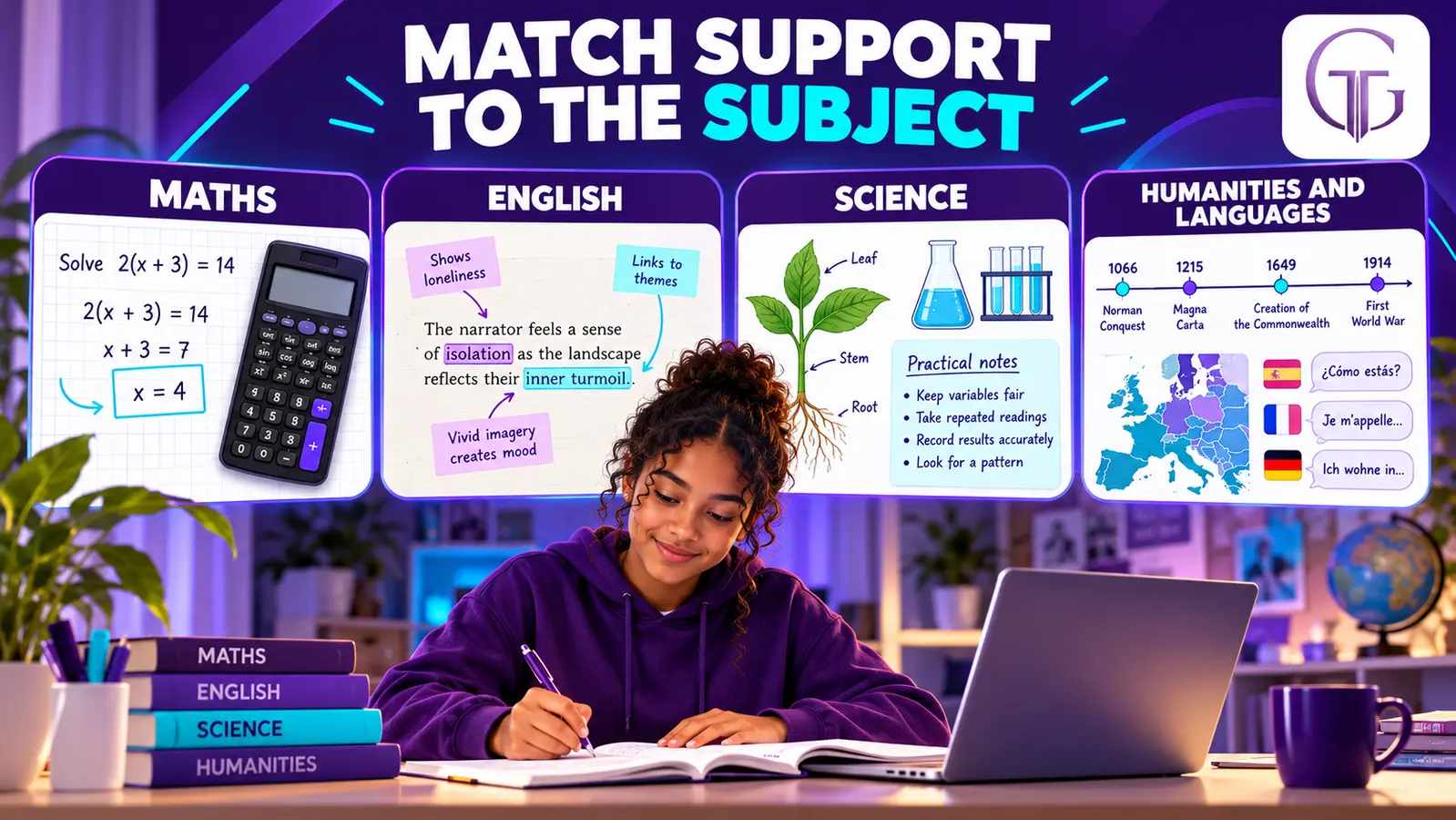
Different subjects need different tutoring. Generic encouragement is not enough.
| Subject area | Best use of tutoring | Useful evidence of progress |
|---|---|---|
| Maths | Diagnose missing foundations, model methods, practise unfamiliar problems | Fewer repeated errors and improved topic-test scores |
| English | Annotate texts, plan responses, mark writing against criteria | Stronger paragraphs, clearer evidence use and better timing |
| Science | Connect concepts, calculations and required practical knowledge | Accurate explanations and higher past-paper marks |
| Humanities | Build precise knowledge and structured extended answers | Better use of evidence, chronology and judgement |
| Languages | Practise listening, speaking, vocabulary and accurate writing | Longer responses with fewer recurring errors |
Families can compare support for GCSE Maths, GCSE English and GCSE Science. A learner may need full teaching in one subject and occasional marking in another. The same package rarely fits every subject.
Should a homeschooled learner take GCSEs or International GCSEs?
Choose GCSE or International GCSE subject by subject, based on progression needs, specification content, assessment method and local centre availability. Neither route is automatically easier. The practical choice is the qualification a suitable centre can accept and the learner can prepare for properly.
International GCSE is often considered because certain specifications rely mainly on written exams. Other subjects include spoken, practical or non-exam assessment requirements that need careful centre planning.
Check the specification code, assessment components and exam series. Then ask the intended sixth form or college about subject requirements.
A tutor must teach the confirmed specification. Topic overlap between boards is substantial, but question style, prescribed content and assessment objectives can differ.
How do home-educated students enter GCSE exams?
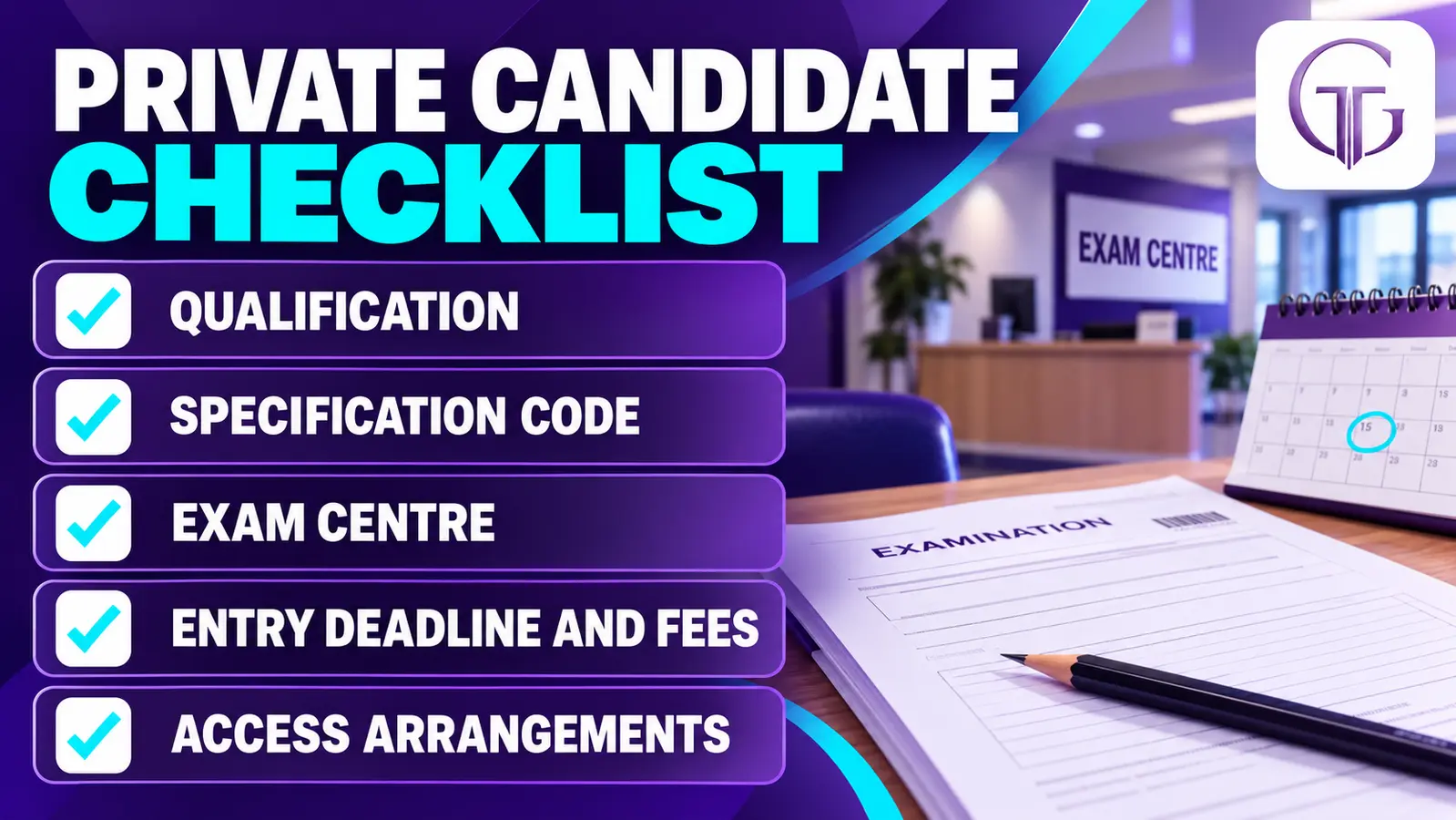
Home-educated students normally sit GCSE or International GCSE exams as private candidates at an accepting school, college or independent centre. Families should contact centres early, confirm the entry code, ask about deadlines and total fees, and discuss practical assessments or access arrangements before booking tuition.
Private candidate means the learner is entered through a centre without attending it as a regular pupil. The exam still takes place under formal conditions.
Use the JCQ private-candidate centre finder as a starting point, not a promise of a place. JCQ notes that listed centres may stop accepting candidates and that other accepting centres may not appear. Contact centres directly.
Ask five questions in writing:
- Do you accept private candidates for this qualification and specification code?
- What is the centre’s entry deadline?
- What is the complete fee, including centre charges?
- Can you host every assessment component?
- What evidence and lead time do you require for access arrangements?
Keep the response in writing. The GCSE exam dates guide supports broad planning, although the centre and awarding organisation remain the final authority.
What should parents check when choosing an online GCSE tutor?
Check the tutor’s subject knowledge, experience with the exact board, safeguarding arrangements, lesson method and feedback process. Ask for a real example of how progress is measured. Qualifications matter, but clear teaching, dependable communication and a good learner-tutor fit matter just as much.
Request specific answers, not polished adjectives. “Experienced” tells you little. Ask how teaching and marking will work each week.
Parents should ask:
- Which specifications have you taught recently?
- How will you diagnose starting points?
- What work happens between lessons?
- How and when will marked work return?
- What safeguarding and identity checks apply?
- Can a parent receive brief progress updates?
- What happens if the match is poor?
The first session should include actual teaching. A friendly chat can test rapport, but it cannot show whether explanations land. Families wondering about timing can also read when to start GCSE tutoring.
What does a workable weekly GCSE routine look like?
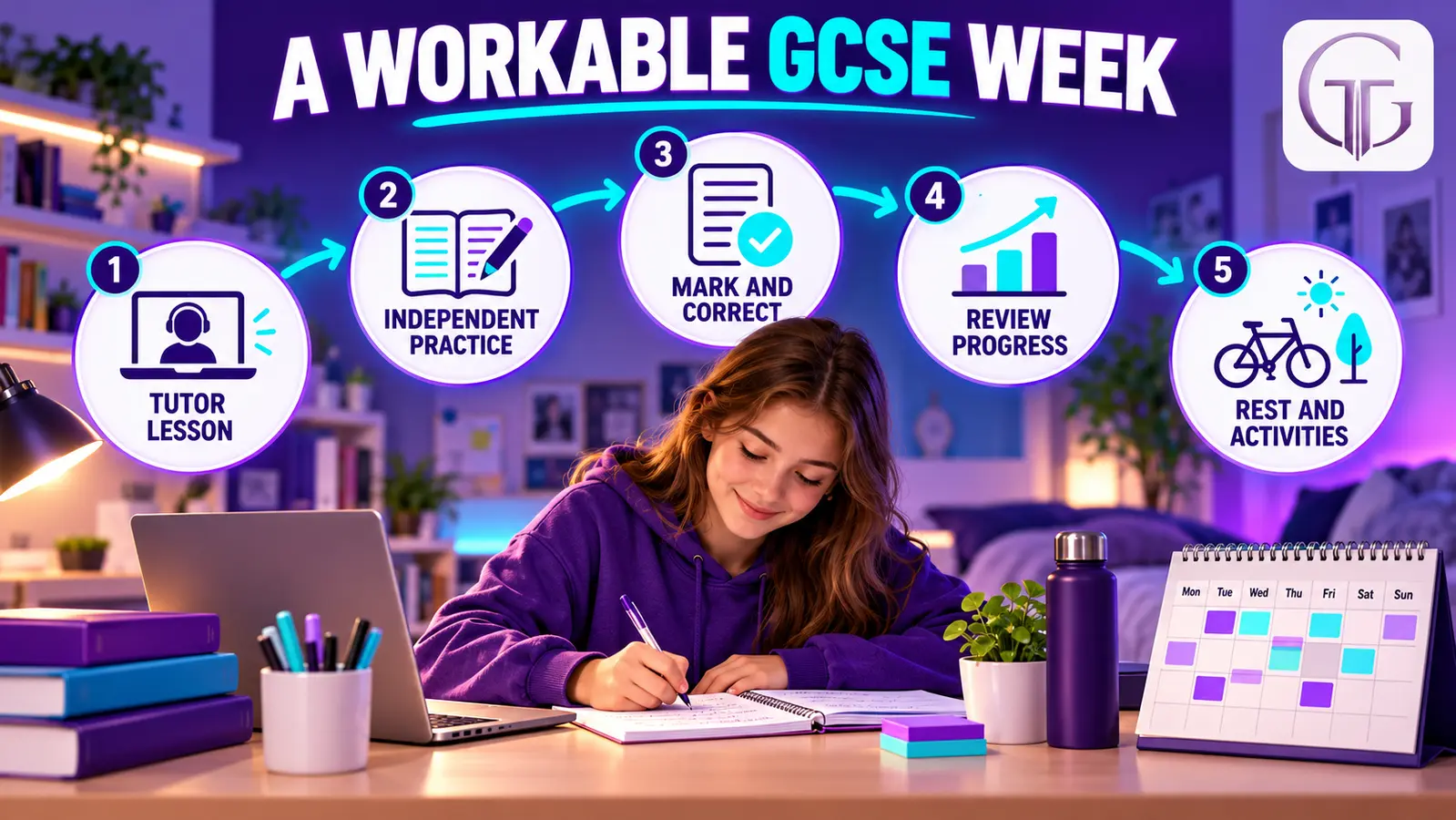
A workable week combines one focused tutor lesson, two or three short independent sessions, marked corrections and a brief review. Schedule demanding work when the learner has energy, protect rest and leave space for interests. Home education should not become school recreated badly at home.
For one subject, a simple rhythm might be:
- Monday: 60-minute tutor lesson on a defined topic.
- Tuesday: 25 minutes of retrieval practice.
- Thursday: 40 minutes of exam questions.
- Friday: correct errors and record the next priority.
- Weekend: no automatic catch-up unless an exam is close.
Hours are not the main measure. Completed, corrected work is.
Use a GCSE revision timetable to spread subjects across the week, then use the broader GCSE revision guide to choose active methods. Reading notes repeatedly feels calm, but testing, writing and correcting do more.
How can tutoring support SEND and access needs?
Tutoring can adapt pace, explanations, lesson length, visual layout and response method around a learner’s needs. Exam access arrangements are separate. Families must discuss those with the chosen centre early because the centre needs evidence, must follow current rules and applies the arrangements during assessment.
Ask the learner what helps, then test practical adjustments: shorter tasks, written instructions, movement breaks, uncluttered worksheets or more processing time.
Access arrangements might include extra time, supervised rest breaks or use of particular support where approved. The tutor can provide useful records of normal working practice, but cannot simply grant an exam arrangement. Keep teaching adjustments and exam administration in separate columns.
Families in England should also note the official distinction between mainstream and special-school placements when moving to home education. Other UK nations use their own guidance and terminology.
How can parents tell whether tutoring is working?
Effective tutoring produces evidence: fewer repeated errors, stronger independent answers, rising scores on comparable questions and clearer explanations from the learner. Review progress every six weeks against the starting point. Confidence matters, but it should sit beside marked work rather than replace it.
Start with a baseline. Use a recent paper, a short diagnostic task or three samples of ordinary work. Record marks by topic or question type, not just a total grade.
At the review, ask three things:
- What can the learner now do without help?
- Which mistake still repeats?
- What should change during the next six weeks?
A flat test score can hide better method or timing, but months of warm feedback with no better work is a warning.
Is GCSE tutoring right for every homeschooled student?
No. A tutor is useful when specialist teaching, feedback or accountability is missing. Tutoring may be unnecessary when the learner is progressing independently, the family already has strong subject support or the real problem is an unconfirmed qualification route rather than weak academic understanding.
Do not buy tuition to avoid an administrative decision. If the centre, board or specification remains unknown, settle that first. A tutor cannot teach accurately towards a moving target.
Pause or change tutoring when the learner dreads every session, the tutor dominates the work or no one can explain what has improved. A poor match is not a moral failure. Sometimes a different tutor fixes it. Sometimes the student needs fewer sessions, a course, group study or simply more time.
Good GCSE tutoring for homeschooled students adds expertise without crowding out family life.
What else do parents ask about GCSE tutoring for homeschooled students?
Parents usually ask whether tutors are compulsory, how early lessons should start, how many subjects need support and who books exams. Short answers help, but every decision should still be checked against the learner’s specification, intended progression and the rules of the accepting exam centre.
Is a tutor compulsory for a homeschooled GCSE student?
No. Families can teach subjects themselves or use courses and other resources. A tutor is most useful where specialist explanation, marking or regular accountability is missing.
Can a homeschooled student take GCSEs without joining an online school?
Yes. A learner can study independently and enter through an accepting exam centre as a private candidate. Confirm the qualification and centre before committing to materials.
When should GCSE tutoring start for a home-educated learner?
Start when the plan identifies a real gap. Year 10 allows steady teaching, but focused support can begin earlier or later depending on prior knowledge and the exam date.
How many tutoring hours does a homeschooled GCSE student need?
One focused lesson per week is a reasonable starting point for one subject. Adjust it using completed work, progress evidence and the learner’s capacity, not anxiety.
Can one tutor teach every GCSE subject?
Occasionally, but subject specialists are usually safer at GCSE level. Maths, English, sciences and languages demand different knowledge and assessment expertise.
Does the tutor arrange GCSE exam entry?
Usually not. Families normally arrange private-candidate entry with an exam centre. Ask the tutoring provider exactly what is included before assuming administrative support.
Can online tutoring support a student with SEND?
Yes, when the tutor adapts pace and materials appropriately. Exam access arrangements must still be agreed with the exam centre under current rules.
Need GCSE Support?
Get one-to-one online GCSE tutoring for Maths, English, Science and other GCSE subjects from home.