
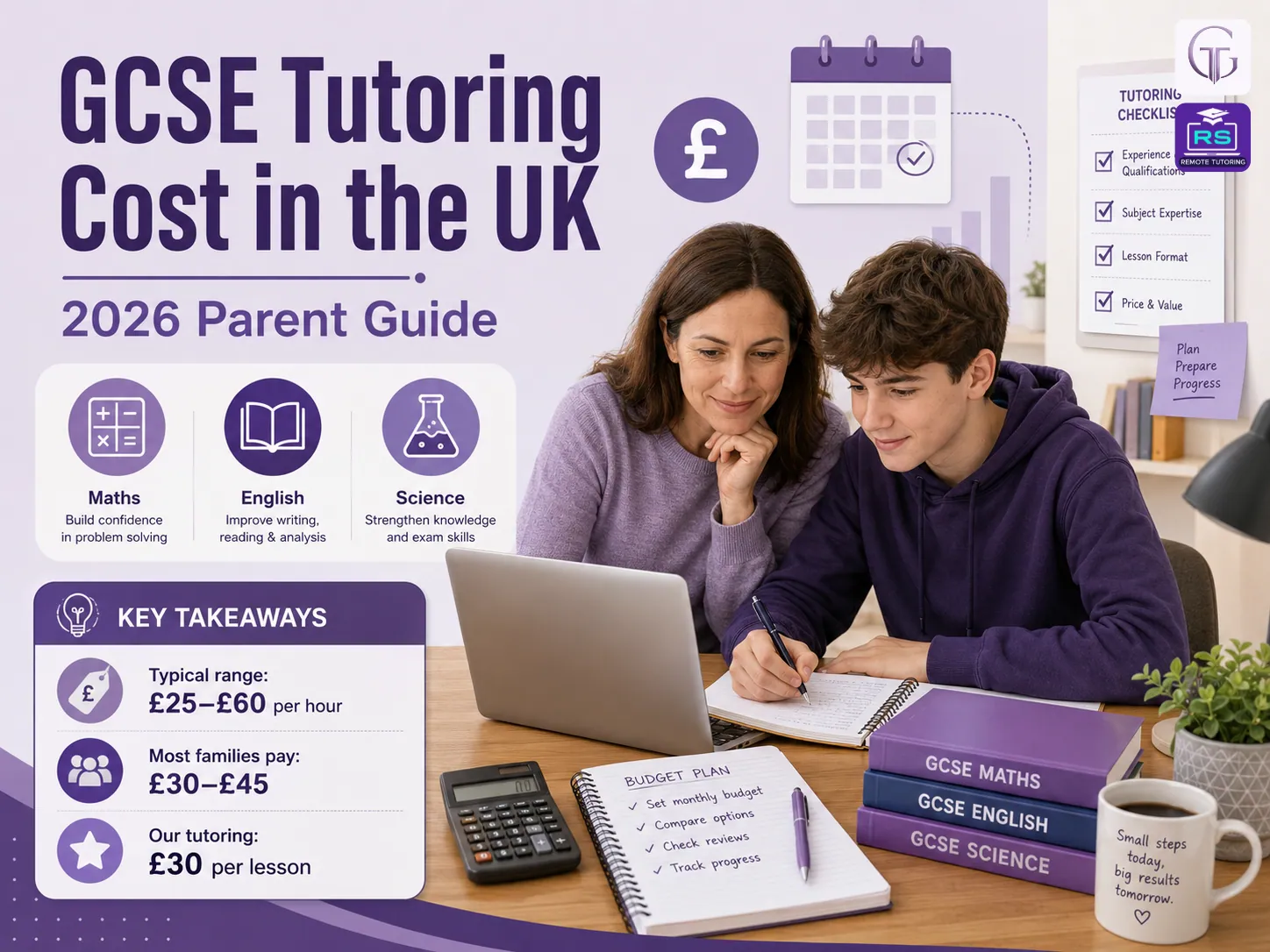
Choosing GCSE tutoring is both an academic and a financial decision. Parents want their child to thrive in Maths, English and Science, but they also need a realistic plan for what tutoring costs. As a GCSE content writer who has spent years researching study skills and supporting families through the revision journey, I often hear the same questions: How much does GCSE tutoring cost? Is online cheaper than in‑person tutoring? How many lessons do we need? This guide answers those questions clearly, using up‑to‑date price data and a parent‑friendly perspective.
In 2026 the UK tutoring market remains buoyant, with demand driven by GCSE and A‑level exams, post‑pandemic learning gaps and the pressure to secure sixth form or college places. Private tutors charge anywhere from £25 to £60 per hour for GCSE subjects, but those figures hide a wide range of factors: subject scarcity, tutor experience, travel time, agency fees and regional differences. Online tutoring can reduce costs by 10 to 25 % compared with in‑person lessons, and a London‑based tutor may charge 20 to 40 % more than a tutor elsewhere in the UK. In other words, there isn’t one UK price for GCSE tuition; there’s a spectrum.
This guide breaks down the spectrum into practical choices. We’ll look at average rates, compare formats, explore subject‑specific costs, explain what drives the price up or down and help you decide whether £30 per lesson, the price we charge for GCSE tutoring across subjects, fits your family’s budget and needs. I’ll also share experience‑based insights about how to get the most value from tutoring without overspending.
GCSE Tutoring Cost in 2026: Quick Answer for Parents
Most families pay £30 to 45 per hour for GCSE tutoring. Current UK tutoring price guides commonly place private GCSE tutoring at around £30 to £55 per hour, with online GCSE tutoring often around £25 to £40 per hour and face‑to‑face lessons around £30 to £50 per hour. Market rate tables also suggest online GCSE English or humanities often costs £25 to 40, in‑person tuition outside London around £30 to £45, and London tuition around £40 to £55. For Maths and Science, those ranges usually shift up by about £5 per hour.
A clear, affordable option sits at around £30 per lesson. That’s the rate we charge per lesson for GCSE tutoring across subjects, making it easy to budget without hidden fees. This price is similar to the lower end of the UK range and reflects structured one‑to‑one support with trained tutors; it is not £30 per hour unless confirmed otherwise.
What Is the Average Cost of a GCSE Tutor?
Average figures can mislead because they compress a wide range into a single number. Nevertheless, they help parents set expectations. Recent reports show:
- £35 to 40 per hour is the average private tutor rate in the UK, but GCSE tutors typically charge a little more than primary tutors and slightly less than A‑level tutors.
- GCSE tutoring rates range from £25 to 60 per hour, depending on tutor experience, subject, location and delivery format.
- GCSE Maths and Science tend to sit at the higher end (£35 to 50 online, £35 to 60 in person) because these subjects have fewer experienced tutors.
- GCSE English Language and Literature often cost £25 to 45 online or £30 to 50 in person, depending on region and tutor qualifications.
These ranges explain why some parents see quotes as low as £25 per hour and others are presented with fees above £50. They also highlight that the £30 per lesson model is comfortably within typical rates, especially for online tuition where travel costs are removed.
GCSE Tutoring Cost by Lesson Type
The cost of tutoring varies not only by subject but by the type of lesson you choose. Here’s an overview:
Online vs In‑Person GCSE Tutoring Cost
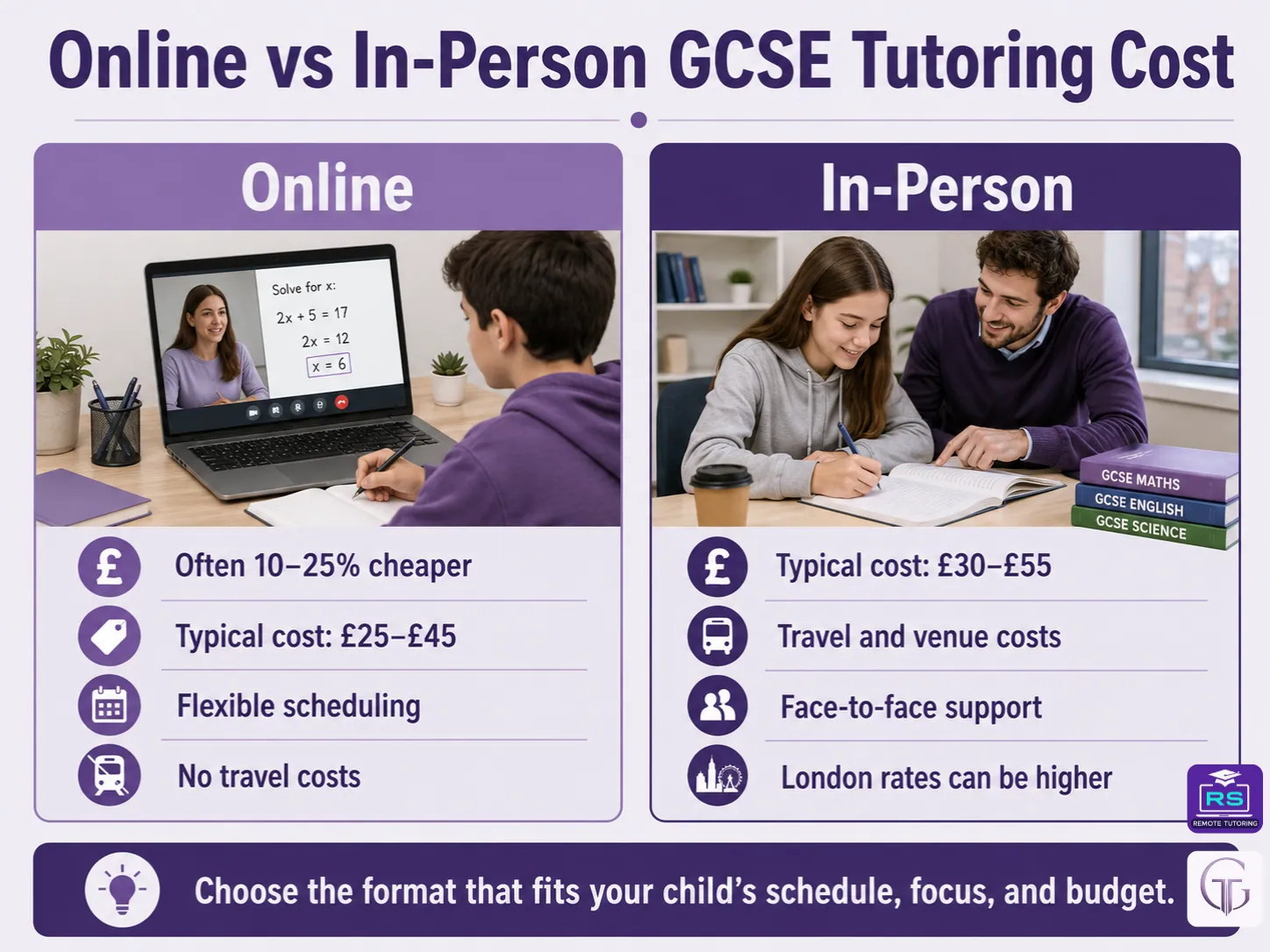
Online tutoring reduces costs by eliminating travel time and broadening the pool of available tutors. Many UK tutoring price guides agree that online lessons are often 10 to 25 % cheaper than equivalent face‑to‑face sessions. In general, online tuition costs less because there are no fuel, travel or transport expenses. Current market tables place online GCSE English or humanities at around £25 to £40 per hour and Maths or Science at around £30 to £45, while in‑person lessons in the same region often cost £30 to £50. Other price comparisons show a similar difference of around 10 to 20 %.
For families in rural areas or cities where local tutors are scarce, online lessons may be the only way to access specialist support without paying London‑level premiums. As an online service, our £30 per lesson structure harnesses this efficiency while providing one‑to‑one attention through live video, interactive whiteboards and digital resources.
One‑to‑One vs Group GCSE Tutoring Prices
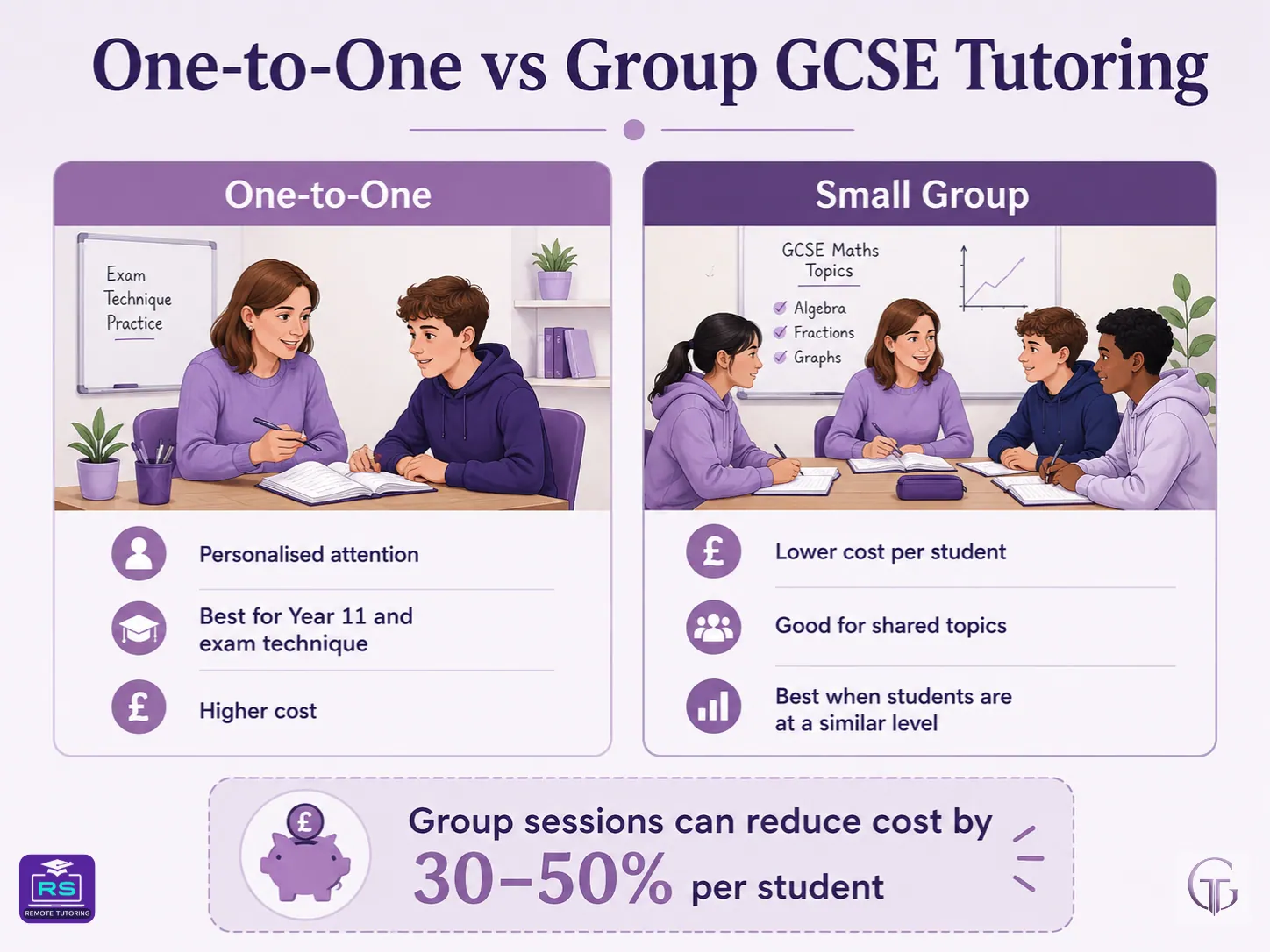
One‑to‑one tutoring offers personalised attention but carries the highest cost. Group lessons with two to four students can reduce the per‑student rate by 30 to 50 %. In our experience, group sessions work best for KS3 and early GCSE topics; they are less suited to intensive Year 11 revision, where individual feedback and exam technique matter more. In our experience, small groups can be an effective cost‑sharing option if students are at the same level and studying the same exam board.
Families choosing between weekly one‑to‑one lessons and less frequent sessions may also consider a blended approach: use a tutor for diagnosis, accountability and higher‑level feedback, while relying on independent revision resources for routine practice. This strategy lowers cost without sacrificing quality.
Agency vs Independent Tutor Rates
Many UK tutoring platforms add a commission, inflating the price parents pay. On commission‑based platforms, students may pay significantly more than the tutor’s own rate. Agencies can also add extra costs to tutor fees. By contrast, direct arrangements with independent tutors or finder’s‑fee platforms avoid ongoing commissions; you pay only the tutor’s quoted rate plus any one‑off unlocking fee. When comparing prices, ask whether the rate you’re quoted is the tutor’s rate or a platform‑inflated figure.
One‑to‑One vs Group GCSE Tutoring Cost Comparison Table
| Tutoring Type | Typical Cost Pattern | Best For | Parent Tip |
| Online one‑to‑one | £25 to 45 per lesson (Maths/Science toward the top of the range) | Students needing flexible scheduling, access to specialist tutors beyond their local area and those who work well with digital tools | Check that lessons are interactive (digital whiteboard, shared documents) and that homework and feedback are provided between sessions. |
| In‑person one‑to‑one | £30 to 55 per hour in most regions; £45 to 60 per hour in London | Students who focus better face‑to‑face or who have unreliable internet access; those needing hands‑on guidance or local exam‑board knowledge | Factor in travel time and costs; consider online sessions with a specialist outside your area to reduce price and broaden options. |
| Small‑group tutoring (online or in person) | 30 to 50 % less per student than equivalent one‑to‑one sessions | Students covering the same subject and exam board; early GCSE (Year 9 to 10) or revision bursts | Ensure group size stays small enough for individual feedback and ask how the tutor manages differences in ability. |
| Large group or class tutoring | Typically the cheapest per student but varies widely (often run by tutoring centres) | Students who want lower‑cost support and broad topic coverage | These sessions rarely offer detailed feedback; they work best as a supplement to self‑study or personalised tutoring. |
GCSE Tutoring Cost by Subject
GCSE Maths Tutoring Cost
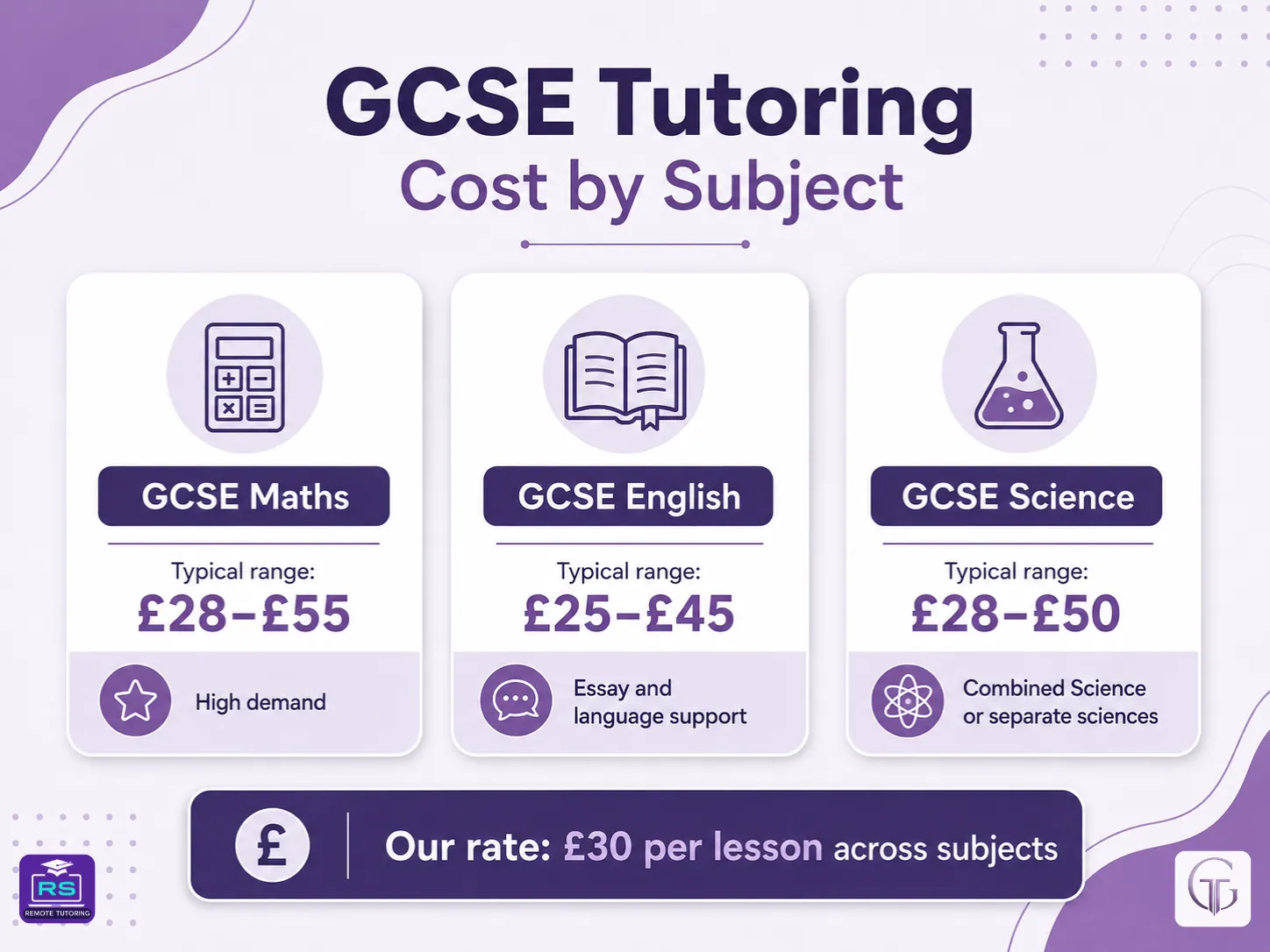
Maths is consistently the most in‑demand GCSE subject and tends to command higher rates. UK tutoring rate guides commonly list typical Maths rates at around £28 to £55 per hour. Market tables often show Maths and Science tutoring at £30 to £45 online, £35 to £50 in person outside London, and £45 to £60 in London. Specialist Higher‑tier Maths tutors who focus on grade 7 to 9 content or exam-board strategy may charge £55 to 70+ per hour, particularly near exams or in scarce regions.
If your child needs structured one‑to‑one GCSE Maths tutoring but local rates are prohibitive, online lessons at around £30 per lesson provide a balanced middle ground: more affordable than the high London rates yet focused on grade‑level mastery and exam technique.
GCSE English Tutoring Cost
English tutoring covers both Language and Literature. Rates are slightly lower than Maths or Science because more tutors are available. UK tutoring rate guides often place English tutoring between £25 and £48 per hour, while market tables commonly list GCSE English or humanities at £25 to £40 online and £30 to £45 in person, rising to £40 to £55 in London. Experienced English tutors who specialise in essay feedback, creative writing or exam techniques may charge more. Group or short‑burst revision sessions can help keep costs down, especially when students need targeted writing practice rather than weekly support.
GCSE Science Tutoring Cost
Science rates depend on whether your child is studying Combined Science or separate Biology, Chemistry and Physics. UK tutoring rate guides commonly show Science tutoring at around £28 to £50 per hour. Market tables often list Maths and Science together at £30 to £45 online and £35 to £50 in person outside London. Premium rates apply for Physics and Chemistry specialists due to scarcity. As with Maths, an online tutor charging around £30 per lesson can offer subject expertise without the London price tag, especially if you target specific weak topics like equations or scientific writing.
Why Do GCSE Tutor Prices Vary So Much?
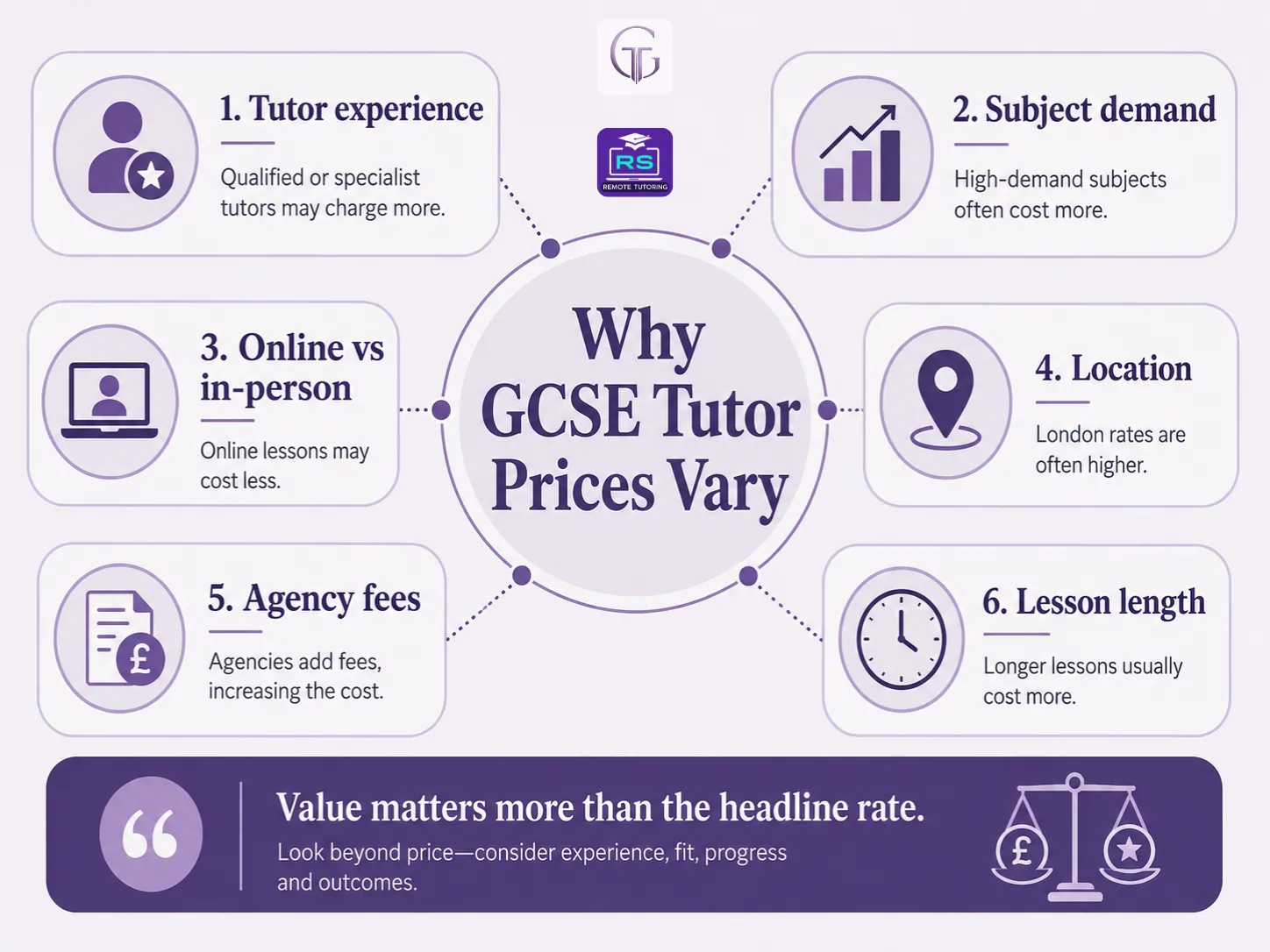
Tutoring isn’t a commodity; it’s a tailored service influenced by multiple factors:
- Tutor experience and qualifications: Experienced tutors who have taught for years or have QTS (Qualified Teacher Status) can charge more because they diagnose misconceptions quickly and know how to align answers with mark schemes. Newer tutors may be cheaper but might take longer to identify why a student is losing marks.
- Subject scarcity: Maths, Physics and Chemistry tutors are in shorter supply than English tutors, so rates rise accordingly. Specialist tutors for Further Maths or triple science can command high fees.
- Exam‑board expertise: Tutors familiar with AQA, Edexcel, OCR, WJEC or Eduqas syllabuses and mark schemes provide targeted feedback that improves exam technique and typically charge more.
- Location: London and the South East run 20 to 40 % above national averages due to cost of living and demand density. Some other cities like Cambridge or Oxford track London rates, while regions like the North East or rural areas fall below the average.
- Format: Online lessons remove travel costs and allow families to access tutors outside high‑price areas, reducing fees by 10 to 25 %. Group sessions spread the cost but reduce individual attention.
- Platform or agency fees: Commission‑based platforms add 25 to 49 % on top of the tutor’s rate. Agencies typically take 15 to 25 %. Direct bookings or finder’s‑fee platforms avoid this markup.
- Course length and urgency: Tutors may charge more when there’s high exam pressure, such as just before GCSEs, or may offer discounts for block bookings or long‑term commitments.
Understanding these factors helps parents interpret price quotes and avoid over‑paying for generic services. It also explains why £30 per lesson can be excellent value if the tutor offers structured lessons, exam‑board knowledge and targeted feedback.
Is £30 per Lesson Good Value for GCSE Tutoring?
The simple answer: yes, when the lesson is structured and focused. A tutor charging £30 per lesson may sound cheaper than one charging £45 per hour, but the real question is what happens during and between lessons. In my experience, the best value lessons combine:
- Clear learning objectives and planning: The tutor should set a goal for each session based on the student’s needs and exam specification.
- Explanation and guided practice: Live teaching uses the interactive whiteboard to model methods, then the student works through similar problems with support.
- Homework or independent practice: Effective tutors assign targeted questions or small tasks between sessions to consolidate learning.
- Feedback and next steps: A quick review of homework at the start of the next lesson identifies misconceptions and guides planning.
This approach means you’re paying for progress, not just time. When comparing prices, ask what the tutor provides beyond the hour. The cheapest tutor may simply supervise homework, whereas a slightly more expensive tutor might include marked papers, exam‑board feedback and revision plans, saving money in the long run by accelerating improvement.
How Much Should Parents Budget per Month?
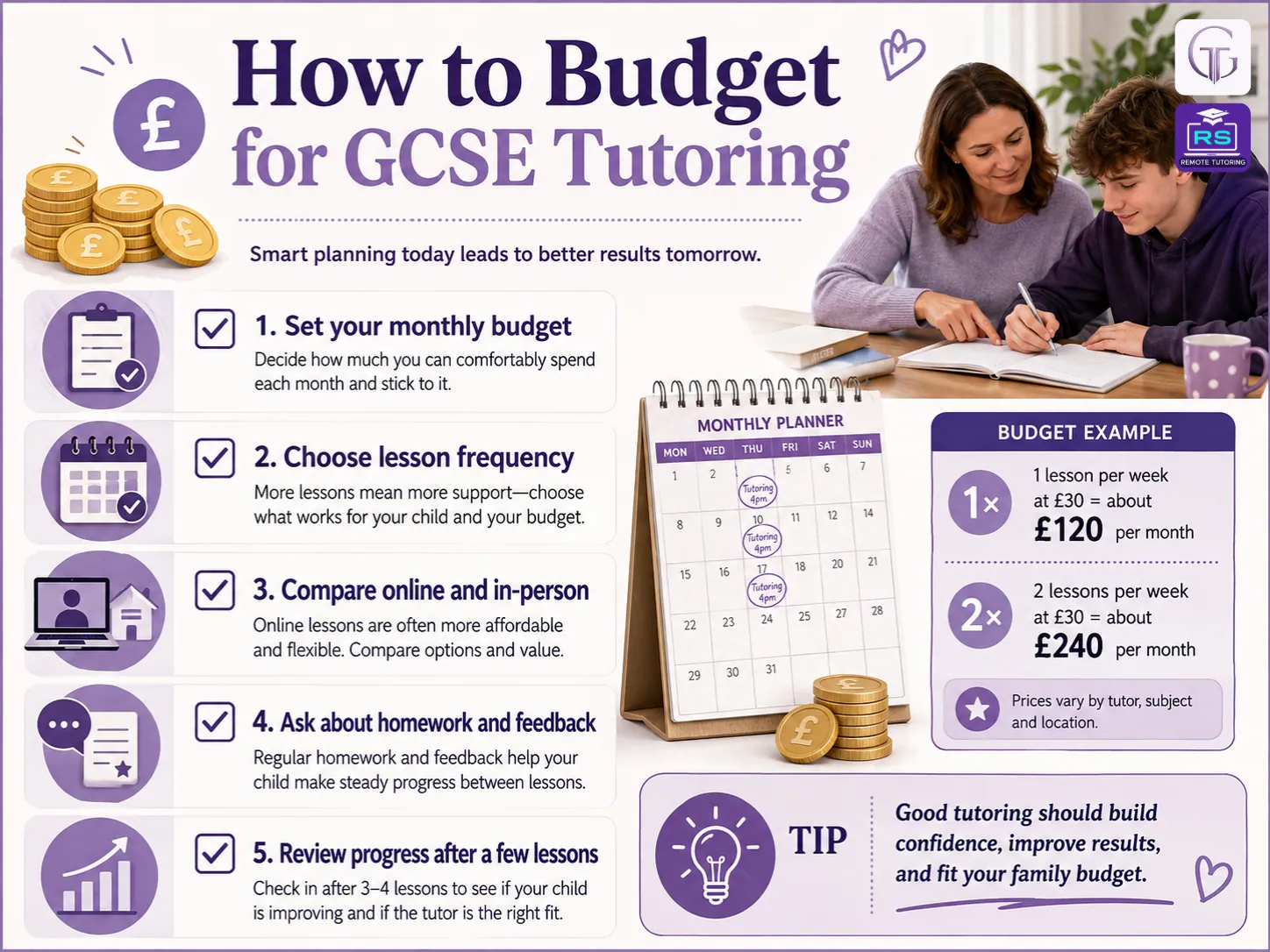
The monthly cost depends on the number of lessons and the price per lesson. Here’s a simple budgeting table using typical UK rates and including our £30 per lesson option for comparison:
| Lessons per Week | Price per Lesson | Approx. Monthly Cost* | Who It May Suit |
| 1 | £25 | £100 | Students needing light support or early Year 10 revision; often group sessions or tutors with less experience |
| 1 | £30 (our rate) | £120 | Balanced option for consistent one‑to‑one support without a high premium; covers all GCSE subjects |
| 1 | £40 | £160 | Specialist tutors or in‑person lessons; suits students with specific difficulties or needing more tailored exam‑board guidance |
| 2 | £30 | £240 | Intensive support for students behind target grade or approaching exams; includes time for feedback and exam technique |
| 2 | £50 | £400 | High‑end in‑person tutoring; appropriate for urgent grade improvement or specialist subjects |
*Assumes 4 lessons per month (typical four weeks). Costs will vary with holidays and exam schedules.
If you budget for one lesson per week during the academic year (about 30 to 32 weeks), our £30 per lesson rate amounts to roughly £900 to 960 for a full GCSE course. This is less than the cost of many premium tutors (£45 to 60 per hour) and offers consistent, structured support across all GCSE subjects without travel.
Is GCSE Tutoring Worth the Cost?
Deciding whether tutoring is worth the investment depends on your child’s goals and needs. Many families value tutoring for more than just grade improvement. A good tutor can:
- Provide personalised explanations and fill gaps that school lessons can’t cover due to class size.
- Develop exam technique by teaching students how to interpret command words, structure answers and manage time under pressure.
- Boost confidence and motivation by giving students a safe space to ask questions and receive constructive feedback.
- Help with revision planning and study skills, ensuring that students work efficiently and don’t leave revision too late.
Research shows that students across England and Wales increasingly rely on private tutoring; roughly 29 % of secondary students have received some form of tutoring, rising to 41 % among secondary pupils and 49 % among high-income families. However, the educational benefits are not automatic. Value comes from matching the tutor to the student’s needs, ensuring regular attendance and encouraging independent practice between sessions.
Is 1 Hour of Tutoring per Week Enough?
For many Year 10 students or those requiring minor support, one hour per week can be sufficient. It allows the tutor to cover new concepts, review homework and set independent tasks. But as exams approach, or if your child has significant gaps or confidence issues, two hours per week may be more effective because there’s more time for practice and feedback.
Exam‑prep tutoring commonly involves around 15 to 30 lessons across an academic year. At one hour per week, that equates to roughly seven to eight months; at two hours per week, it compresses into four months. The decision depends on your budget, the student’s starting point and how well they work independently.
Cheap vs Expensive GCSE Tutoring: What Really Matters?
Low cost doesn’t always mean low quality, and high cost doesn’t guarantee results. Here’s a framework to help evaluate tutors beyond price:
| Price Level | Possible Benefit | Possible Risk | What to Check |
| Under £30 per lesson | Affordable for families; may suit confident students who need occasional guidance | Tutor may be less experienced or inexperienced with exam boards; sessions may be more reactive than planned | Ask how they structure lessons, track progress and handle exam technique. Ensure they provide homework and feedback. |
| Around £30 per lesson | Balance between affordability and quality; often online; professional tutors with subject expertise | Travel not included if in person; may not have decades of classroom experience | Check that the tutor adapts lessons to your child’s strengths and weaknesses and offers exam‑specific practice. |
| £40 to £55 per hour | Likely to be experienced teachers or specialists; strong knowledge of mark schemes and exam boards | Higher cost; risk of paying for extras you don’t need (e.g., travel time, agency fees) | Confirm whether cost includes planning, homework marking and exam‑style feedback. |
| £55+ per hour | Highly specialised or in-demand tutors; useful for grade 8 to 9 pushes or A‑level subjects | Expensive; value only if lessons are laser‑focused on the student’s needs | Ask for evidence of results, how they differentiate from mid‑range tutors and whether self‑study resources could replace some sessions. |
Questions to Ask Before Choosing a GCSE Tutor
Many parents I’ve worked with initially focus on price. Through experience, I’ve learned that asking the right questions before booking makes a bigger difference than shaving a few pounds off the hourly rate. Consider asking:
- Which exam boards do you teach most often?
A good tutor should answer with specific boards (AQA, Edexcel, OCR, WJEC, Eduqas) rather than “all of them”. - How do you spot why a student is losing marks?
Listen for a clear process (analysing past papers, assessing written work) rather than generic statements. - Do you set work between sessions and how do you track progress?
Strong tutors give targeted homework, mark it and use it to plan the next lesson. - What happens if my child is shy or lacks confidence?
Tutors should explain how they build rapport and adapt their teaching style. - What’s included in the price?
Does the tutor provide resources, past paper practice, marking and revision plans? More expensive tutors may include these extras. - How long is each lesson?
Make sure you’re comparing like with like (per hour vs per lesson). Our rate of £30 per lesson assumes a structured session with follow‑up feedback; some tutors quote per hour plus additional marking time.
How to Tell If GCSE Tutoring Is Good Value
After a few lessons, assess whether tutoring is working. Look for:
| Sign | What It Means | What Parents Should Do |
| Improved clarity and confidence | Your child feels more comfortable tackling topics and expresses greater self‑belief | Ask them to explain a concept they struggled with previously; monitor stress levels before homework and tests |
| Better homework quality | The student makes fewer errors and shows more working; they correct mistakes from previous lessons | Review marked homework with them; note whether corrections are being applied |
| Rising mock or test scores | Test results start climbing or at least stabilising after decline; grade predictions improve | Celebrate progress, even small gains; adjust lesson frequency if progress stalls |
| Greater independence | Your child begins taking responsibility for their revision, using tutor advice without prompting | Encourage them to set their own study goals and communicate these to the tutor |
| Regular communication from the tutor | You receive updates on strengths and weaknesses and clear feedback after each session | Maintain open dialogue; discuss any concerns early and adjust the lesson plan |
If these signs are absent after a few sessions, reconsider the match rather than immediately looking for a cheaper tutor. A good fit is worth the investment.
When Online GCSE Tutoring Can Be More Cost‑Effective
From experience, there are several scenarios in which online tutoring is especially cost‑effective:
- Limited local tutor availability: Families in small towns or rural areas often have few subject specialists nearby. Online tutoring opens access to tutors nationwide, reducing cost and travel.
- Busy schedules: If your child is balancing school, clubs and family commitments, online sessions save travel time and allow more flexible scheduling.
- Focused exam technique: Online tools like digital whiteboards, shared documents and instant messaging enable tutors to provide exam‑style feedback efficiently. This works particularly well for GCSE English essay planning and Maths problem solving.
- Confidence building: Some students, especially those anxious about Maths or Science, feel more comfortable asking questions from home rather than face‑to‑face.
However, online tutoring is not automatically better. Students who struggle to stay focused on screen may benefit from in‑person sessions where the physical presence of a tutor keeps them engaged. The key is choosing the format that suits your child’s learning style and availability rather than assuming one format is superior.
Common Mistakes Parents Make When Comparing Tutoring Costs
- Comparing rates without considering lesson length or structure: A £30 session with clear planning, homework and feedback may deliver more value than a £25 session with no structure.
- Ignoring platform fees: Commission‑based platforms inflate costs by 25 to 49 %. Check whether you’re paying the tutor’s rate or the platform’s markup.
- Choosing the highest or lowest price as a proxy for quality: Some expensive tutors are overrated; some affordable tutors are excellent. Ask the right questions about exam board expertise and teaching approach.
- Booking too few sessions and expecting quick fixes: Tutoring is most effective when consistent over time. Under‑budgeting can lead to stopping early and losing momentum.
- Relying solely on the tutor. Revision should involve independent study and practice. Use a blended model (self-study plus tutoring) to maximise value.
Balancing Cost and Value
GCSE tutoring costs in the UK vary widely. Rates from £25 to £60 per hour reflect differences in subject scarcity, tutor expertise, location, lesson format and platform fees. On average, parents pay around £35 to 40 per hour, but many effective tutors fall closer to the £30 to 45 range when lessons are booked online. Our £30 per lesson option fits comfortably within this range, offering one‑to‑one attention without a high price tag.
Ultimately, value matters more than the headline rate. A slightly higher price can be worth paying if the tutor is experienced, exam‑board literate, and provides structured lessons with feedback and homework. Equally, a lower price can be excellent value when the tutor is a good match for your child’s needs and you supplement tutoring with self‑study. By understanding the factors that influence price and asking informed questions, you can choose GCSE tutoring that supports your child academically and works within your family budget.
Frequently Asked Questions
How much does GCSE tutoring cost in the UK?
GCSE tutoring in the UK typically costs between £25 and £60 per hour, with most tutors charging £30 to 45 per hour. Online lessons tend to be 10 to 25 % cheaper than face‑to‑face sessions. Our service offers one‑to‑one GCSE tuition at £30 per lesson, which is within the lower end of the typical range.
What is the average GCSE tutor hourly rate?
Current UK tutoring price data often places the average tutor rate at around £35 to £40 per hour, with GCSE tutors charging £30 to £55 per hour depending on subject, region and format. Maths and Science often sit at the higher end, while English falls closer to the middle.
How much does online GCSE tutoring cost?
Online GCSE tutoring usually costs £25 to 45 per hour. UK tutoring price guides often note that online rates are typically 10 to 25 % cheaper than in‑person lessons. Market rate tables suggest online GCSE English lessons often cost £25 to £40 and Maths or Science £30 to £45. Our pricing of £30 per lesson fits within this range and includes structured support across GCSE subjects.
How much does in‑person GCSE tutoring cost?
In‑person tutoring rates vary by region. In most of the UK, expect to pay £30 to 55 per hour, while in London rates can be £45 to 60 per hour. Travel time, tutor availability and cost of living all contribute to higher face‑to‑face prices.
Is £30 per lesson good value for GCSE tutoring?
Yes, if the lesson includes structured teaching, targeted practice and feedback. The £30 per lesson rate sits near the lower end of typical UK tuition prices and is especially competitive for one‑to‑one online tutoring. Value is determined not just by price but by tutor quality, lesson structure and how well the tutor matches your child’s needs.
Is GCSE Maths tutoring more expensive?
GCSE Maths tutoring tends to be more expensive than English because of higher demand and fewer available tutors. Typical rates range from £28 to 55 per hour. Higher‑tier or specialist tutors may charge up to £70 per hour. Choosing an online tutor at around £30 per lesson can reduce cost while providing strong subject expertise.
Is GCSE English tutoring cheaper than Maths?
Generally, yes. GCSE English tutoring often costs £25 to 45 per hour, whereas Maths can be £30 to 55 per hour. However, rates vary by tutor experience and location. Advanced English Literature coaching or expert essay feedback may command higher prices.
How much should parents budget for GCSE tutoring each month?
Budget depends on lesson frequency and price. One lesson per week at £30 per lesson costs about £120 per month. At £40 per lesson it’s £160 per month. Two lessons per week double those figures. Be sure to factor in any platform fees if you’re using a commission‑based service.
Is one GCSE tutoring lesson per week enough?
For general support and early Year 10 revision, one lesson per week can be sufficient. As exams approach or if your child has significant gaps, two lessons per week may be more effective. Exam‑prep tutoring commonly involves around 15 to 30 lessons across an academic year.
How long should a GCSE tutoring lesson be?
Most GCSE tutoring sessions last 60 minutes. Some tutors offer shorter sessions (45 minutes) for younger students or quick topic reviews, while others run 90‑minute sessions to cover more ground. When comparing prices, confirm whether the quote is per hour or per lesson.
Should I choose a cheaper GCSE tutor?
Price should not be your only criterion. A lower‑cost tutor can be a great match if they provide structured lessons, exam‑board knowledge and clear feedback. However, extremely low rates may indicate a lack of experience or support. Focus on value, fit and credentials.
Are expensive GCSE tutors always better?
Not necessarily. Some high‑price tutors are excellent, but others offer no additional value over mid‑range tutors. Before paying a premium, ask about their track record, exam‑board expertise and what’s included in the fee.
Is online GCSE tutoring cheaper than in‑person tutoring?
Yes. Online tutoring is typically 10 to 25 % cheaper because there are no travel costs and tutors can work with students outside high‑cost regions.
When should my child start GCSE tutoring?
It depends on your child’s needs. Many students start tutoring in Year 10 to build a strong foundation and avoid last‑minute cramming. Others wait until Year 11 mock results reveal specific weaknesses. Starting earlier allows more time to develop study skills and reduces the intensity (and cost) of last‑minute tutoring.
Can GCSE tutoring help with resits?
Yes. GCSE resit students often need targeted support to address gaps and refine exam technique. Tutors familiar with resit specifications (especially for English Language and Maths, which students must retake if they don’t achieve a grade 4) can help students focus on key areas and improve confidence. Rates for resit tutoring are similar to standard GCSE rates.
Balancing academic goals with family budgets can be challenging. If you’re seeking structured GCSE support without confusing hourly rates, our online tutoring service offers £30 per lesson across Maths, English, Science and other GCSE subjects. You’ll get one‑to‑one attention, tailored lesson plans and clear feedback without paying a premium for travel or commission. Reach out for a friendly chat about how we can support your child’s GCSE journey.
Need GCSE Support?
Get one-to-one online GCSE tutoring for Maths, English, Science and other GCSE subjects from home.